Gear Ratio Chart: Which Reel Speed for Which Lure
This guide covers the baitcaster gear ratio for lures with hands on, tested picks.
Quick answer: Use a slow 5:1 to 6:1 reel for deep crankbaits and big swimbaits, a medium 6:1 to 7:1 for spinnerbaits and all around fishing, and a fast 7:1 to 8:1 or quicker for flipping, frogs, and topwater. The ratio sets how much line you recover per handle turn, which controls lure speed and slack pickup.
Key takeaways
- Gear ratio sets how much line you recover per handle turn.
- Slow reels crank hard baits, fast reels pick up slack for hooksets.
- Match the ratio to the lure and technique, not the fish.
- Inches per turn, or IPT, tells the real speed better than ratio alone.

Gear ratio confuses a lot of anglers, but it comes down to speed. The ratio tells you how fast the reel picks up line, which changes how a lure fishes. Use the wrong ratio and you burn a crankbait or miss a flipping bite. This chart matches ratio to lure so you always pick right.
You learn what the ratio means, how it maps to each lure, and why inches per turn tells the real story. Keep this as a quick reference when you rig up.
What Gear Ratio Means
Gear ratio is how many times the spool turns for one turn of the handle. A 7:1 reel turns the spool seven times per handle turn, so it picks up line fast. A 5:1 reel turns it five times, so it picks up line slower but with more cranking power. Higher ratio means faster, lower ratio means more torque.
A better measure is inches per turn, or IPT, which tells you how much line you actually recover per handle turn. Two reels with the same ratio can have different IPT depending on spool size. When you can, compare IPT for the true speed.
The Gear Ratio Chart
| Ratio range | Speed | Best lures and techniques |
|---|---|---|
| 5:1 to 6:1 | Slow, high torque | Deep crankbaits, big swimbaits |
| 6:1 to 7:1 | Medium, versatile | Spinnerbaits, chatterbaits, all around |
| 7:1 to 8:1 | Fast | Jigs, Texas rigs, flipping |
| 8:1 and up | Very fast | Frogs, punching, burning baits |
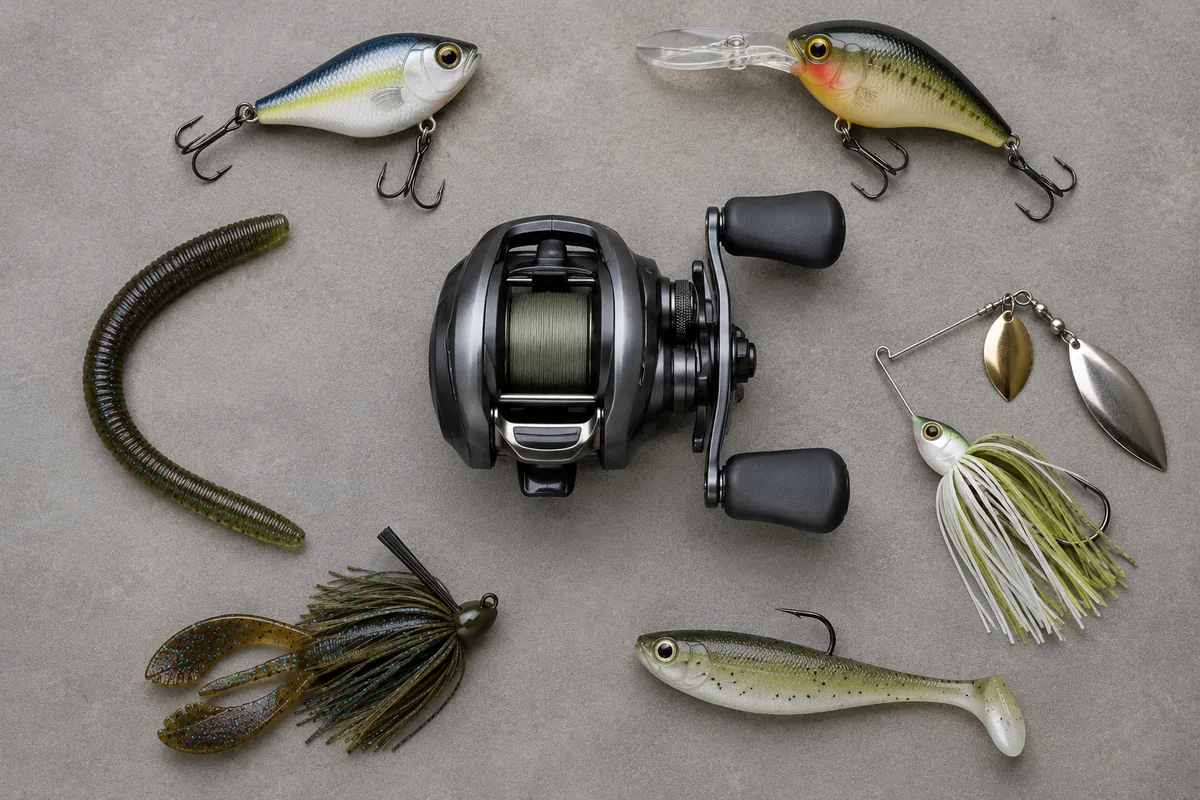
A slow 5:1 to 6:1 reel keeps deep crankbaits and big swimbaits in the zone and adds cranking power for their resistance. A medium 6:1 to 7:1 reel is the do everything range for spinnerbaits and general fishing. A fast 7:1 to 8:1 reel picks up slack for jigs and flipping hooksets. And 8:1 and up burns frogs and moves fish fast from cover.
Why Slack Pickup Matters
For techniques where a fish eats with slack line, like flipping a jig or setting on a frog, a fast reel picks up that slack in a hurry so your hookset lands with power. A slow reel leaves slack that softens the set. That is why power techniques favor fast reels, and why matching ratio to technique catches more fish.
How to Choose
If you buy one reel, a 6.8:1 to 7.1:1 ratio covers the most techniques. Add a slow 5.4:1 for deep cranking and a fast 8:1 for frogs and punching as you specialize. Match the ratio to the lure and technique you fish most, and use IPT to compare true speed when you can.
Frequently asked questions
What gear ratio for crankbaits?
A slower 5:1 to 6:1 reel for deep crankbaits. It keeps the bait in the zone at a natural speed and adds cranking power for the bait’s resistance. Shallow squarebills can use a slightly faster reel.
What is a good all around gear ratio?
A 6.8:1 to 7.1:1 reel. It moves most bass lures at a natural pace, picks up slack for hooksets, and has enough power for most techniques. It is the best single ratio if you buy one reel.
What ratio for flipping and frogs?
A fast 7:1 to 8:1 or quicker reel. These power techniques need fast slack pickup so your hookset lands hard, and speed to move a fish from cover. Frogs and punching favor the fastest reels.
What does 7.1:1 mean?
It means the spool turns 7.1 times for each turn of the handle, so the reel picks up line quickly. A higher first number means a faster retrieve. Compare inches per turn for the true speed across reels.