How to Clean and Lube a Baitcaster Step by Step
Here is how to clean a baitcaster, explained in simple, tested steps.
Quick answer: To clean a baitcaster, remove the side plate and spool, wipe out old grease and grit, add a drop of oil to the bearings and a light film of grease to the gears, and reassemble. Do a quick wipe down after every trip and a full service every few months, or after any saltwater use.
Key takeaways
- Oil goes on fast moving bearings, grease on slower gears.
- Wipe the reel after every trip, service it fully every few months.
- Saltwater use demands cleaning right away, every time.
- Do not over lube. A little oil and grease is enough.

A clean, well lubed reel casts smoothly and lasts for years. A neglected one grinds, backlashes, and dies early. The good news is that basic reel care takes only a few minutes and needs just two products, oil and grease. This guide walks you through cleaning and lubing your baitcaster the right way.
You learn the full service step by step, where each lubricant goes, and how often to do it. Do this and your reel will stay smooth season after season.
What You Need
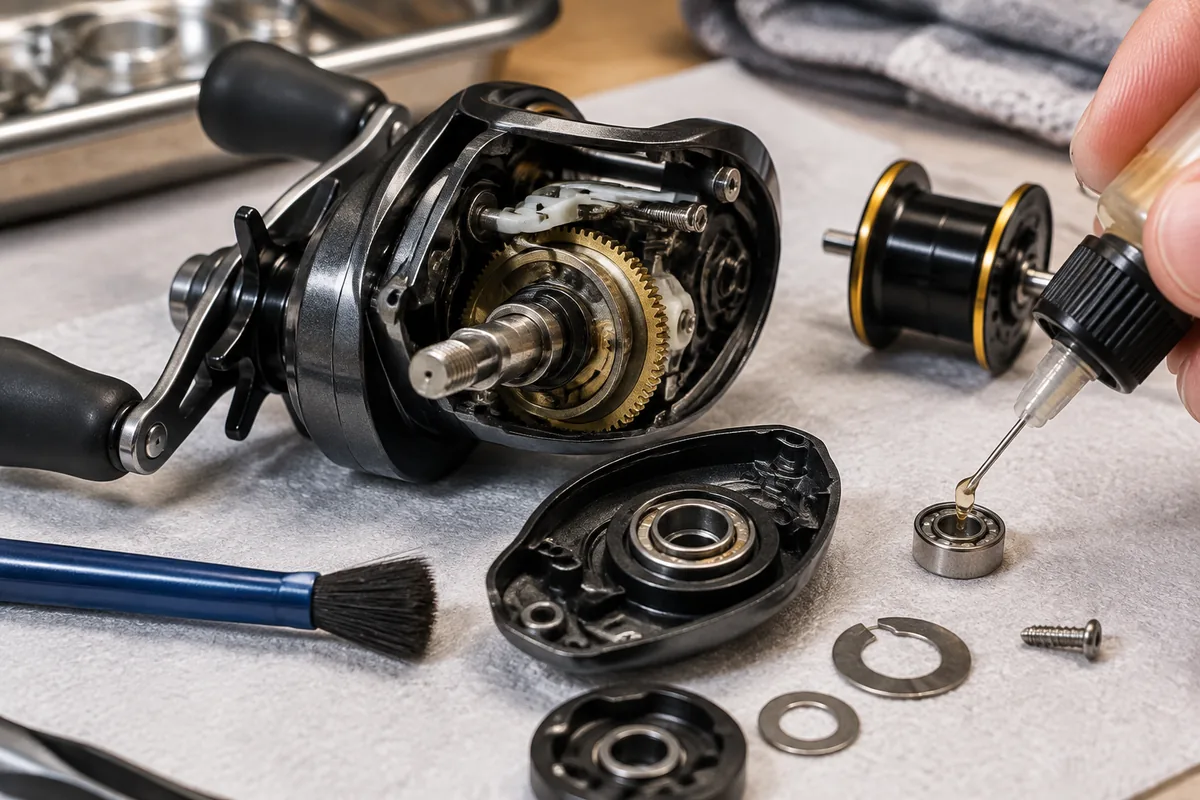
Gather reel oil, reel grease, a soft cloth, cotton swabs, and a small brush. Have your reel’s schematic handy if you are new to it, so you know how it comes apart. Work over a tray so small parts do not roll away. That is all it takes for a basic service.
The Cleaning Steps
| Step | What to do |
|---|---|
| 1 | Remove the spool and open the side plate |
| 2 | Wipe old grease, grit, and salt from the parts |
| 3 | Clean the bearings and gears with a cloth or swab |
| 4 | Add a drop of oil to each spool bearing |
| 5 | Apply a light film of grease to the gears |
| 6 | Reassemble, then turn the handle to spread the lube |
Take your time and handle small parts carefully. Wipe away all old grit before you add fresh lube, since dirty grease grinds parts down. Once clean, apply new lube sparingly and reassemble in reverse order.
Oil Here, Grease There
The rule is simple. Oil goes on fast moving parts, mainly the spool bearings, where thin lubrication lets them spin freely. Grease goes on slower moving parts, mainly the gears, where thick lubrication protects them under load. Using the wrong one, like grease on the spool bearings, slows your cast.
How Often to Service
Do a quick wipe down after every trip, drying the reel and clearing surface grit. Do a full service, opening the reel to clean and lube, every few months of regular use. After any saltwater trip, clean the reel right away, since salt corrodes fast. Match the schedule to how hard you fish.
Do Not Over Lube
More lube is not better. Too much oil or grease attracts grit and can slow the reel. A single drop of oil per bearing and a thin film of grease on the gears is plenty. Wipe away any excess. A light, clean application keeps the reel smooth without gumming it up.
Frequently asked questions
How often should you clean a baitcaster?
Wipe it down after every trip, and do a full service opening the reel every few months of regular use. After saltwater, clean it right away. Fish harder or in salt, and clean more often.
Oil or grease on reel bearings?
Oil. Bearings spin fast, so they need thin oil that lets them turn freely. Use a single drop per bearing. Grease is too thick for bearings and would slow your cast. Save grease for the slower moving gears.
Can you over lube a reel?
Yes. Too much oil or grease attracts grit and can slow the reel. Use a drop of oil per bearing and a thin film of grease on the gears, then wipe away any excess. A light application is best.
How do you clean a reel after saltwater?
Rinse it with a light fresh water spray right after the trip, dry it, then open it to clean and lube soon after. Salt corrodes fast, so prompt cleaning is essential to keep a reel working after saltwater use.