Round vs Low Profile Baitcaster: Which Is Better
This guide covers the round vs low profile baitcaster with hands on, tested picks.
Quick answer: Low profile baitcasters palm easily and suit most bass fishing, while round reels hold more line and handle heat and heavy drag better for catfish, musky, and saltwater. Choose low profile for comfort and finesse, and round when you need line capacity and long fight endurance.
Key takeaways
- Low profile reels palm comfortably and suit all day bass casting.
- Round reels hold more heavy line and shed heat on long runs.
- Choose low profile for comfort and finesse, round for big fish.
- Most bass anglers use low profile, round is for heavy jobs.

The two shapes of baitcaster look different for a reason. Each is built for a different kind of fishing. Pick the wrong one and you fight your gear, either palming a bulky round reel all day or running out of line on a big fish with a small low profile. This guide sorts out which is which.
You learn how the two differ, when each wins, and how to choose. It settles a common question with a clear answer based on how you fish.
The Core Differences
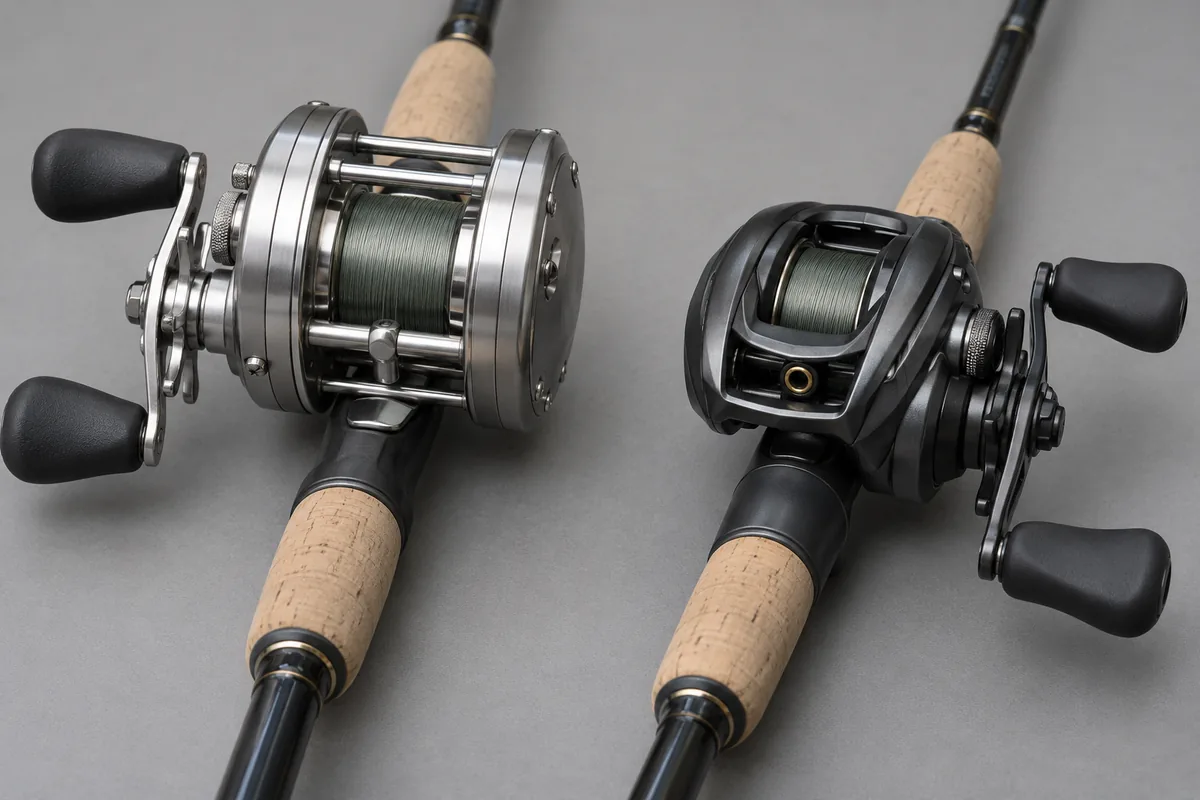
A low profile reel sits low and flat, so it cups in your palm. It is light and comfortable for all day casting, which is why it rules bass fishing. Its smaller spool holds enough line for most freshwater work but not huge amounts of heavy line.
A round reel has a larger, rounder body. That bigger spool holds more heavy line and sheds heat better on a long run, which matters for big fish. The trade off is comfort. A round reel is bulkier and does not palm as easily, so it tires your hand over a long day of casting.
When Each Wins
| Trait | Low profile | Round | Winner |
|---|---|---|---|
| Comfort and palming | Excellent | Bulky | Low profile |
| Line capacity | Good | High | Round |
| Heat on long runs | Fair | Excellent | Round |
| All day bass casting | Excellent | Tiring | Low profile |
| Big fish endurance | Good | Excellent | Round |
Low profile wins for comfort, finesse, and all day bass casting. Round wins for line capacity, heat control, and big fish like catfish, musky, and saltwater species. Match the reel to the job, and each shines in its element.
Which Should You Buy
For bass and most freshwater fishing, buy a low profile reel. It is comfortable, versatile, and covers nearly every technique. Only step to a round reel when you target big fish that demand heavy line and a drag that endures, like catfish, musky, salmon, or saltwater species.
Most anglers own several low profile reels and one round reel for the big stuff. That mix covers the full range of fishing. Start with low profile, and add a round reel when a big fish species pulls you toward it.
Frequently asked questions
When should I use a round reel?
Use a round reel for catfish, musky, salmon, and saltwater, where you need lots of heavy line and a drag that endures long runs. Its larger spool holds more line and sheds heat better than a low profile reel.
Is low profile better than round?
For bass and most freshwater fishing, yes, because it palms comfortably and suits all day casting. For big fish that need heavy line and drag endurance, round is better. Each wins in its element.
What is a round reel good for?
Big fish and heavy line. Catfish, musky, stripers, salmon, and saltwater fishing reward a round reel’s capacity and heat control. It is not the choice for finesse bass fishing, where low profile wins on comfort.
Are round reels harder to use?
They are bulkier and less comfortable to palm for all day casting, so they can tire your hand. For their intended jobs, big fish and heavy line, they work well. For finesse casting, a low profile reel is easier.