Baitcaster Reel Parts and Anatomy Explained
This guide covers the baitcaster reel parts with hands on, tested picks.
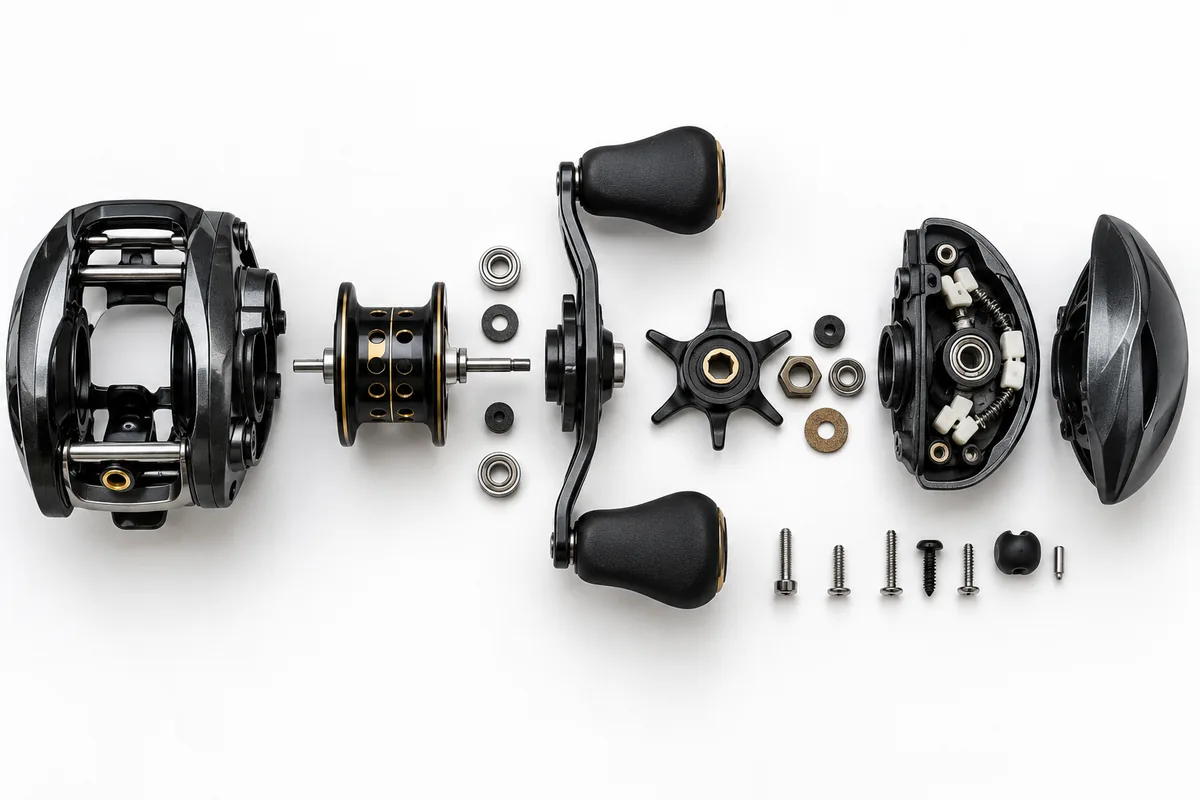
Quick answer: A baitcaster reel has a spool that holds line, a spool tension knob and brake system that control the cast, a star drag that sets fighting pressure, a handle and gears that set retrieve speed, and a frame that holds it together. Knowing these parts makes tuning and cleaning far easier.
Key takeaways
- The spool holds line and spins to release it on the cast.
- The spool tension knob and brakes control the spool to prevent backlash.
- The star drag sets how line gives to a fighting fish.
- The handle and gears set retrieve speed, shown as the gear ratio.

A baitcaster looks complex, but it is just a few parts working together. Once you know what each does, tuning the reel, fixing a problem, or cleaning it all make sense. This guide names every part and explains its job in plain terms, so the reel stops being a mystery.
You learn the anatomy of a baitcaster, part by part, and how each affects your fishing. Use it as a reference whenever you tune or service your reel.
The Main Parts
| Part | What it does | How it affects fishing |
|---|---|---|
| Spool | Holds line and spins to release it | Casting and line capacity |
| Spool tension knob | Sets how freely the spool spins | Prevents backlash on the cast |
| Brake system | Slows the spool during the cast | Controls backlash across the cast |
| Star drag | Sets fighting pressure | Gives line to a running fish |
| Handle and gears | Turn the spool to retrieve line | Sets retrieve speed |
| Level wind | Guides line evenly onto the spool | Keeps line lay smooth |
| Thumb bar | Disengages the spool to cast | Frees the spool for the cast |
| Frame | Holds all parts together | Durability and weight |
How the Parts Work Together
When you cast, you press the thumb bar to free the spool. The spool spins to release line, while the brake system and your thumb keep it from overrunning into a backlash. You set the spool tension knob so the spool spins at the right speed for your lure.
When you retrieve, you turn the handle, and the gears spin the spool to wind line back. The gear ratio tells you how much line you recover per handle turn. When a fish runs, the star drag lets line slip so it does not snap. The level wind slides back and forth to lay line evenly. The frame holds it all in place.
The Parts You Adjust Most
Three parts get the most attention. The spool tension knob and brake system you set for each lure to prevent backlash. The star drag you set for the fish you chase. Knowing these three, and where they sit, lets you tune the reel for any situation in seconds.
Why Knowing the Parts Helps
Understanding the anatomy pays off in three ways. You tune faster, because you know which knob does what. You troubleshoot better, because you can trace a problem to a part. And you clean and lube correctly, because you know where oil and grease go. A little knowledge of the parts makes you a more capable angler.
Frequently asked questions
What are the parts of a baitcaster?
The main parts are the spool, the spool tension knob, the brake system, the star drag, the handle and gears, the level wind, the thumb bar, and the frame. Each controls a part of casting, retrieving, or fighting a fish.
What is the level wind?
The level wind is the small guide that slides back and forth across the front of the reel, laying line evenly onto the spool as you retrieve. Even line lay helps casting and prevents dig in.
What does the thumb bar do?
The thumb bar, or spool release, disengages the spool so it can spin freely for the cast. You press it with your thumb to cast, then the spool re engages when you turn the handle.
What is the spool tension knob?
The spool tension knob, on the handle side of the reel, sets how freely the spool spins. You adjust it so a lure falls slowly and stops on landing, which helps prevent backlash on the cast.