Rod Power & Action Explained (for Baitcasters)
Key Takeaways
- Rod power and action are two separate specs, power describes how much force it takes to bend the rod, while action describes where along the blank that bend happens.
- A medium heavy rod paired with a fast action tip, like the ones on our Abu Garcia Max SX and Lew’s MACH Smash, covers most freshwater bass fishing.
- Heavier power ratings suit techniques that need extra backbone, like flipping through cover, while lighter power suits smaller lures and lighter line.
- Getting rod power and action wrong for your technique is one of the most common reasons a combo feels wrong even when the reel itself is fine.
Understanding rod power and action is one of the fastest ways to figure out whether a baitcaster combo will actually work for how you fish. On Baitcastercombo.com, every combo we cover is checked against its own listed specifications so you know exactly what you are getting before you buy. This guide breaks down what rod power and action mean, how they differ from each other, and how the combos in our own catalog compare on both specs.
Anglers often use power and action interchangeably, but they describe two different things about a rod. Confusing the two, or ignoring them entirely in favor of gear ratio alone, is a common reason a combo ends up feeling wrong even when every other spec looks great on paper. Getting a handle on rod power and action before you buy saves you from that mismatch entirely.
What Rod Power and Action Actually Mean
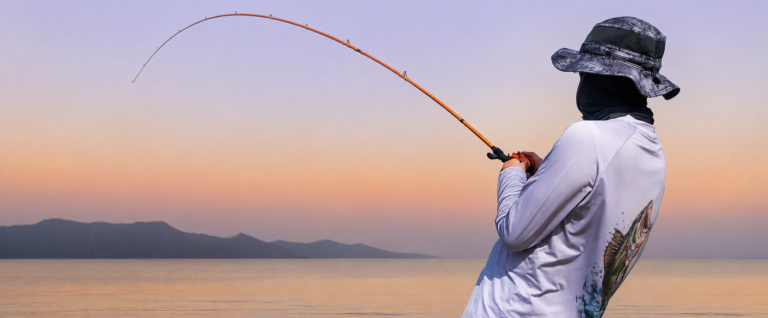
Power describes how much force it takes to bend the rod, ranging from ultralight up through medium, medium heavy, and heavy. A higher power rating means a stiffer rod that takes more force to bend and offers more backbone for setting hooks and fighting fish. Action describes where along the rod blank that bend happens, ranging from slow, where the bend runs deep into the lower half of the rod, to fast, where the bend concentrates mostly in the tip section.
The two specs work together rather than in isolation. A rod can be medium heavy in power and fast in action, offering both backbone and a quick, responsive tip, or it can be medium heavy in power and moderate in action, offering that same backbone with a softer, more forgiving bend through the middle of the blank.
It helps to picture power as a measure of overall stiffness across the entire rod, while action is specifically about where that stiffness is concentrated. Two rods with identical power ratings can feel noticeably different in hand if one has a fast action tip and the other has a moderate action that bends more evenly along its length. Neither approach is wrong, they simply suit different presentations, which is exactly why rod power and action deserve separate attention rather than being treated as a single combined spec.
Our Approach to This Guide
Every spec referenced in this guide, rod power, action, length, and material, is pulled directly from our own product listings at Baitcastercombo.com. We do not add specifications we cannot confirm, and we do not rank a combo higher because of a paid placement. You can read more about how we approach recommendations on our About Us page, where we outline the mission behind the site: honest, verified guidance for anglers at every skill level.
Rod Power Explained
A closer look at how rod power ratings translate to real backbone on the water.
Rod power runs on a scale from ultralight to heavy, and sometimes beyond into extra heavy for specialty applications. Ultralight and light rods suit small lures and light line, typically for panfish and trout. Medium and medium heavy rods, like the 7 foot medium heavy rod on our Abu Garcia Max SX, cover the largest share of freshwater bass fishing, from crankbaits to jigs to heavier swimbaits. Heavy power rods, like the 7 foot 4 inch heavy rod on our KastKing Lethal Blaze, add the backbone needed for punching through matted vegetation or handling bigger fish and heavier lures.
It is worth noting that power ratings are not perfectly standardized across every manufacturer, so a medium heavy rating from one brand can feel slightly different from a medium heavy rating on another. Comparing rod power and action within a single brand’s own lineup tends to be more reliable than comparing across brands, since manufacturers are generally consistent with their own internal scale even when that scale does not perfectly match a competitor’s.
Rod Action Explained
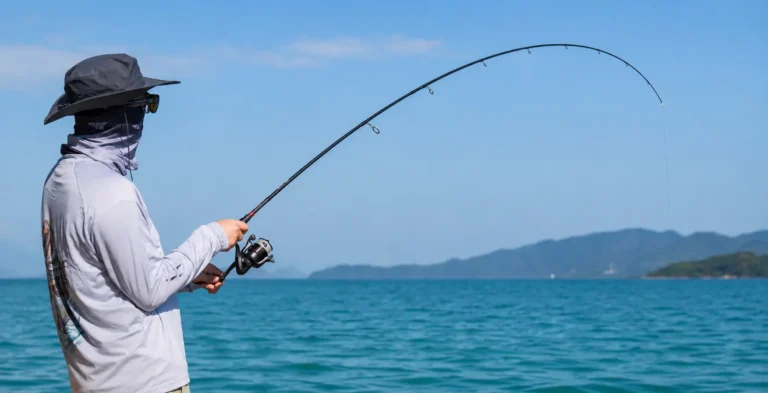
Watching a fast action tip load and unload during a cast helps make the difference easier to see.
Action describes how far down the blank a rod bends under load. Fast action rods, like the ones on our KastKing Lethal Blaze, Spartacus II, and Lew’s MACH Smash, bend mostly in the top third of the rod, giving a quick, responsive tip that is well suited to single hook lures like jigs, worms, and crankbaits where a fast, positive hookset matters. Moderate and slow action rods bend further down the blank, offering a more forgiving load that works well with treble hook lures, where a softer bend helps prevent pulling hooks free during a fight.
Extra fast action, sometimes listed separately from fast action on higher end rods, concentrates the bend into an even smaller section right at the tip, offering the most sensitivity of any action rating but the least forgiveness for timing errors during a hookset. None of the combos in our catalog are currently listed with an extra fast rating, though it is a useful term to recognize if you encounter it while shopping elsewhere.
How to Test a Rod’s Action Yourself
If a listing does not spell out the action clearly, you can get a rough sense of it yourself. Hold the rod by the handle and press the tip against a solid surface like a wall or the ground, applying steady pressure and watching where the bend concentrates. A fast action rod bends noticeably in the top quarter to third of the blank while the rest stays relatively straight. A moderate action rod bends more evenly through the top half, and a slow action rod bends well into the lower half or even close to the handle.
This same test works in a store or at home with a rod you already own, and comparing two rods side by side this way often makes the difference between fast and moderate action far easier to see than reading a spec sheet alone. If you plan to add a second combo built around a different presentation style, testing action this way before you buy helps confirm the new rod will actually feel different from what you already fish.
Rod Power and Action Across Our Catalog
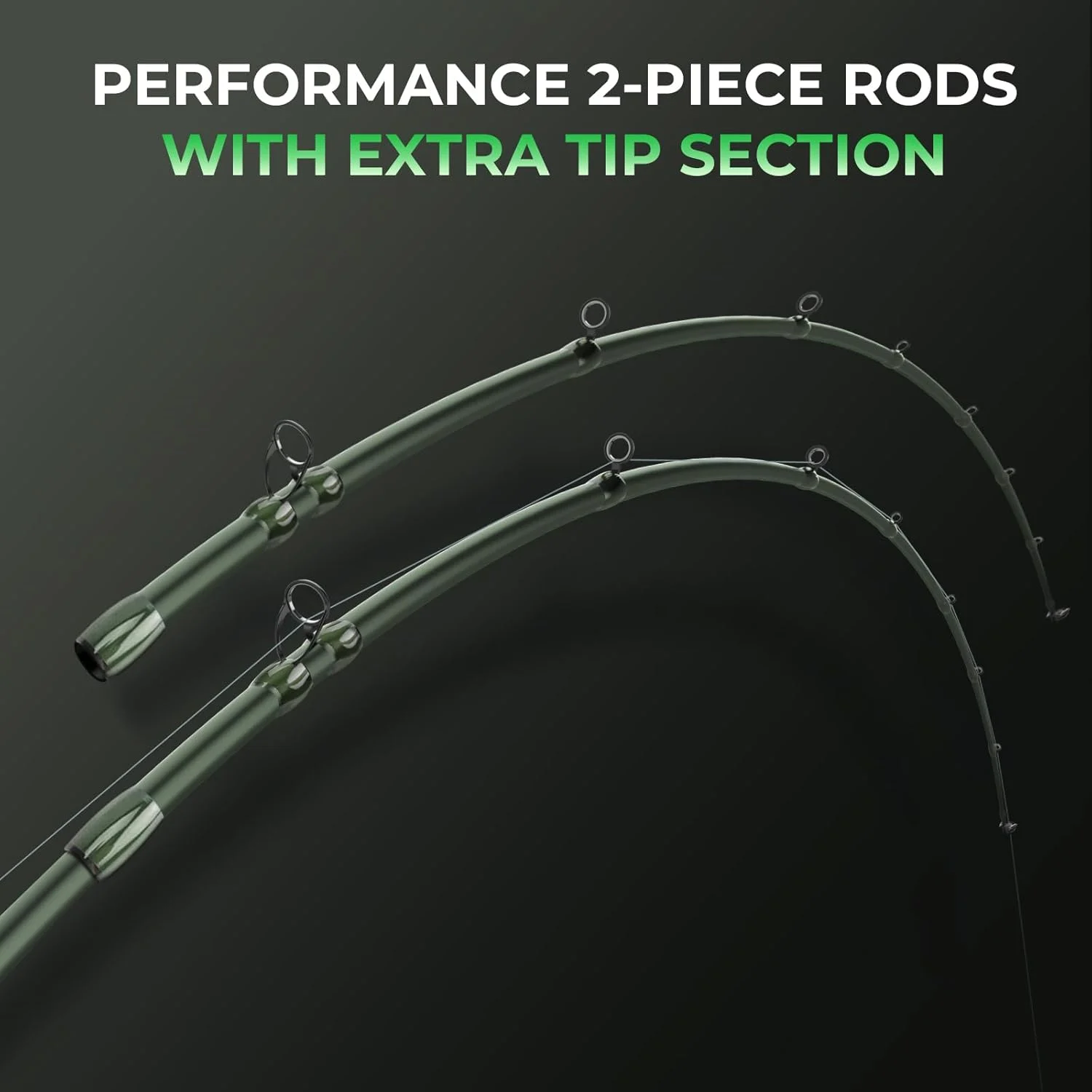
Here is how power and action compare across the combos in our catalog, so you can see exactly what each one offers.
| Combo | Rod Length | Power | Action |
|---|---|---|---|
| Abu Garcia Max SX | 7 ft | Medium Heavy | Not specified |
| KastKing Lethal Blaze | 7 ft 4 in | Heavy | Fast |
| KastKing Spartacus II Twin Tip | Standard length | Medium Heavy | Not specified |
| Lew’s MACH Smash | 7 ft 2 in | Medium Heavy | Fast |
| Kilitn Baitcaster Combo | 5 ft, telescopic | Not specified | Not specified |
Blank Material and How It Interacts With Power and Action
Blank material shapes how a given power and action rating actually feels in hand. Graphite blanks, like the IM6 material used across most of our catalog, tend to feel stiffer and more sensitive for a given power rating compared to fiberglass, which flexes more and transmits less feedback through the blank. That is part of why the fiberglass Kilitn combo, even without a specified action, will generally feel softer overall than a graphite rod of similar length and stated power.
Composite blanks, which blend graphite and fiberglass, aim to split the difference, offering more sensitivity than pure fiberglass while retaining some of the forgiving flex that graphite alone lacks. None of the combos in our catalog currently use a composite blank, but it is worth knowing about if you encounter one while comparing rod power and action across other brands.
Matching Power and Action to Your Technique
Reaction baits like squarebill crankbaits and spinnerbaits generally pair well with a medium power, moderate to fast action rod, since a slightly softer tip helps prevent pulling hooks on a hard strike. Techniques that need a strong, immediate hookset, like flipping a jig into heavy cover or fishing a Texas rigged worm, call for medium heavy to heavy power paired with a fast action tip, giving you both the backbone to move a fish out of cover and the responsiveness to drive a hook home quickly.
Topwater lures with treble hooks are a bit of an exception, since a moderate action rod that bends a bit more forgivingly through the middle helps keep a fish pinned during a jumping, headshaking fight, where a stiffer fast action tip might otherwise let a hook tear free.
Deep diving crankbaits present a similar case for a slightly softer overall setup. A rod with a bit more give through the tip absorbs the shock of a fish striking a fast moving lure, reducing the chance of a hook pulling free during the initial strike, before the fish is fully hooked and you have a chance to apply steady pressure. This is one more example of how rod power and action decisions ripple through every part of a technique, not just the hookset itself.
Matching Power and Action to Target Species
Bass fishing across most techniques is well served by medium to medium heavy power, which is why that range shows up so often across our own catalog. Larger species like pike and catfish generally call for heavier power to handle bigger lures, heavier line, and stronger fighting fish. Smaller panfish and light line applications favor lighter power ratings than anything currently in our lineup, which is worth knowing if panfish are your primary target rather than an occasional bonus catch.
Walleye anglers often split the difference, favoring a medium power rod with a sensitive tip that can register the subtle bites typical of that species while still offering enough backbone to handle an occasional larger fish. Since the KastKing Spartacus II Twin Tip and Lew’s MACH Smash in our catalog are both listed as suitable for walleye alongside bass, their medium heavy power and fast action combination represents a reasonable middle ground for anglers targeting both species on the same trip.
Common Mistakes When Choosing Power and Action
The most common mistake is buying based on rod length or price alone without checking power and action at all, which can leave you with a rod that casts fine but either lacks the backbone to set a hook or feels too stiff for the lure you are actually throwing. A close second is assuming every rod labeled medium heavy behaves identically, when action, blank material, and taper all influence how that power rating actually feels in hand.
Buying a single rod and expecting it to handle every technique equally well is another common misstep. A fast action, medium heavy rod is a strong all around choice, but no single power and action combination excels at everything, and anglers who fish a wide range of techniques often eventually add a second or third combo built around a different power and action pairing.
Overestimating your own casting skill while underestimating rod power is a subtler mistake worth naming too. A rod that is technically capable of handling heavier lures and line does not automatically cast them well in less experienced hands, since a heavier setup demands more refined casting mechanics to avoid backlash and fatigue over a long day. Working up gradually to heavier power ratings as your technique improves tends to produce better results than jumping straight to the heaviest option available.
How Power and Action Affect Casting Feel
Rod power and action influence casting feel as much as reel settings do. A stiffer, heavier power rod loads less during the cast, which can make it harder to feel the rhythm of a smooth casting stroke compared to a lighter, more flexible rod. This is part of why beginners are sometimes advised to start with a slightly lighter power rod while learning basic casting mechanics, then move up to heavier power as their casting stroke becomes more consistent.
Action plays a role here too, since a fast action rod loads and unloads its energy quickly and requires tighter timing between your casting motion and thumb control on the spool. A moderate action rod loads more gradually, giving slightly more forgiving timing for anglers who are still developing a consistent casting rhythm. Neither factor replaces proper reel setup, tension and brakes still matter, but the rod itself is not a neutral part of the equation when it comes to preventing backlash.
Conclusion: Choosing the Right Power and Action
Once you understand rod power and action as two separate specs working together, choosing a baitcaster combo becomes far less guesswork and far more matching real numbers to your actual fishing. Our own catalog leans toward medium to heavy power with fast action tips, a combination that covers the majority of bass fishing techniques well, though heavier or lighter options may serve you better depending on your specific target species and technique. Keep this guide handy the next time you are comparing listings, since a quick check of both specs together tells you more about how a rod will actually perform than either one alone.
Browse our full lineup of reviewed setups on our Blogs page, where we continue adding tested picks and guides across every budget and skill level.
Ready to Find Your Perfect Power and Action?
Compare rod specs, gear ratios, and drag ratings before you buy.
Shop Baitcaster CombosFrequently Asked Questions About Rod Power and Action
Still have questions? These are the ones anglers ask us most, and you can browse even more on our FAQs page.
Power describes how much force it takes to bend the rod, while action describes where along the rod that bend happens, closer to the tip for fast action or further down the blank for slow action.
Medium to medium heavy power paired with a fast action tip covers most bass fishing techniques well, from crankbaits and spinnerbaits to jigs and Texas rigged worms.
A more forgiving moderate action bends further down the blank during a fight, which helps keep treble hooks pinned in a fish’s mouth rather than tearing free the way a stiffer fast action tip might.
A slightly lighter power rod can make it easier to feel the rhythm of a smooth casting stroke while learning, with many anglers moving up to heavier power as their casting becomes more consistent.
A fast action, medium heavy rod is a strong all around choice, but no single combination excels at everything, which is why many anglers eventually add a second combo built around different specs.
Indirectly, yes. A stiffer, heavier power rod loads less during the cast, which can make casting rhythm harder to feel and increase the chance of backlash while you are still learning that specific rod.
Press the tip against a solid surface and watch where the bend concentrates. Fast action bends mainly in the top third, moderate action bends through the top half, and slow action bends well into the lower half.
Yes, graphite blanks tend to feel stiffer and more sensitive for a given power rating than fiberglass, which flexes more and transmits less feedback through the rod during a cast or a fight.