How to Palm a Baitcaster and Hold It Right
Here is how to palm a baitcaster, explained in simple, tested steps.
Quick answer: To palm a baitcaster, cup the reel in your rod hand so the reel sits in your palm and your thumb rests on the spool. This grip controls the cast, speeds up your thumb response to backlash, and reduces wrist fatigue over a long day of fishing.
Key takeaways
- Cup the reel in your palm with the rod running through your fingers.
- Rest your thumb on the spool, ready to control the cast.
- A good grip reduces wrist fatigue over a long day.
- Grip is a hidden reason beginners struggle with a baitcaster.

Grip is the part of baitcasting no one teaches, yet it decides how well you cast and control the reel. Hold a baitcaster wrong and your thumb cannot reach the spool in time to stop a backlash, and your wrist tires fast. Hold it right and casting feels natural. This guide shows you the grip.
You learn how to palm the reel, where your thumb goes, and how the grip reduces fatigue. It is a small skill that makes a big difference for new casters.
The Palming Grip
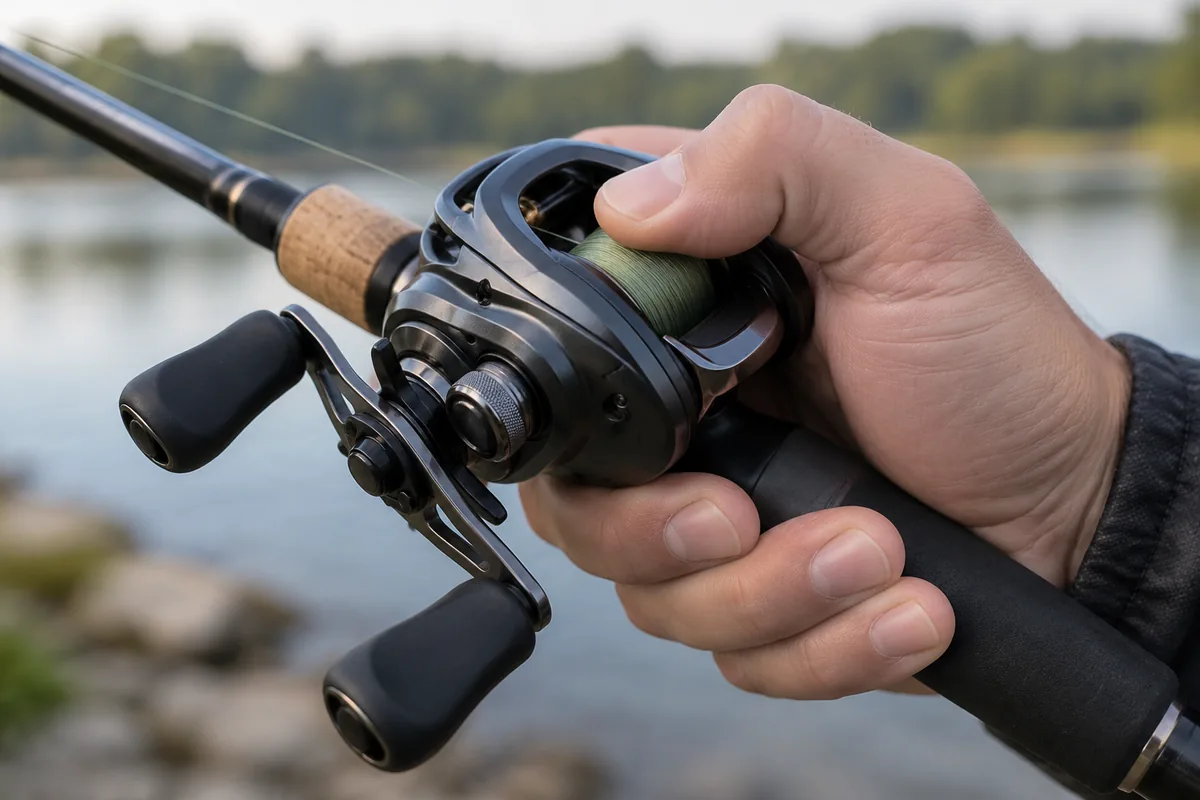
A low profile baitcaster is shaped to sit in your palm. Cup the reel so its body rests against your palm, with the rod handle running between your fingers. Your hand wraps the reel from below, and the reel becomes part of your hand rather than a lump you grip from above. This is why the reels are called low profile.
From this grip, your rod hand controls the whole combo. You cast, retrieve, and fight fish without shifting your hold. The reel feels balanced and secure, which builds confidence for a new caster.
Where Your Thumb Goes
Your thumb is the most important part of the grip. Rest it lightly on the spool, ready to press down. During the cast, your thumb controls the spool, feathering it to prevent overrun and pressing to stop the lure. A palming grip puts your thumb right where it needs to be, so you react to a backlash instantly.
Why Grip Reduces Fatigue
A good grip spreads the weight of the combo across your palm and fingers, rather than forcing your wrist to hold it from above. Over a long day of casting, that lower strain keeps your wrist and forearm fresh. Anglers who fish for hours notice the difference between a comfortable grip and a tiring one.
Left or Right Hand
You palm the reel with whichever hand holds the rod. If your reel has a right hand retrieve, you cast and palm with your left hand, then switch to reel with your right. If it has a left hand retrieve, you palm and reel with the same hand and never switch. Choose your reel’s handle side to match how you want to hold and reel.
Frequently asked questions
How do you hold a baitcaster?
Cup the reel in your palm with the rod handle between your fingers, so the reel becomes part of your hand. Rest your thumb on the spool. This palming grip gives cast control and reduces wrist fatigue.
Where does your thumb go on a baitcaster?
On the spool. Rest your thumb lightly there, ready to press. During the cast, your thumb feathers the spool to prevent backlash and presses to stop the lure. A palming grip puts your thumb in the right spot.
Why palm a baitcaster?
Palming gives cast control by placing your thumb on the spool, and it reduces wrist fatigue by spreading the combo’s weight across your hand. It also keeps your rod hand in charge of casting, retrieving, and fighting fish.
Which hand holds the rod?
The hand opposite your reel’s retrieve side. With a right hand retrieve reel, you hold and palm with your left hand, then reel with your right. With a left hand retrieve, you hold and reel with the same hand.