How Many Bearings Does a Baitcaster Need?
This guide covers the how many bearings baitcaster with hands on, tested picks.
Quick answer: Bearing quality matters more than bearing count. A reel with five or six good sealed bearings often outcasts and outlasts one with eleven cheap ones. Look for corrosion resistant, shielded bearings, and treat a very high count at a low price as a marketing number, not a promise of smoothness.
Key takeaways
- Quality beats quantity. A few good bearings outperform many cheap ones.
- The spool and handle bearings matter most for casting and smoothness.
- Shielded, corrosion resistant bearings last longer, especially in salt.
- A high bearing count at a low price is often a marketing number.

Reel listings love to shout a big bearing number, as if more always means better. It does not. A cheap reel with eleven bearings can feel rougher than a quality reel with six. Understanding what bearings do, and where they matter, saves you from paying for a number that does not help. This guide clears it up.
You learn what bearings do, which ones matter, and how to read the spec without falling for hype. It is a corrective take that helps you judge reels fairly.
What Bearings Do
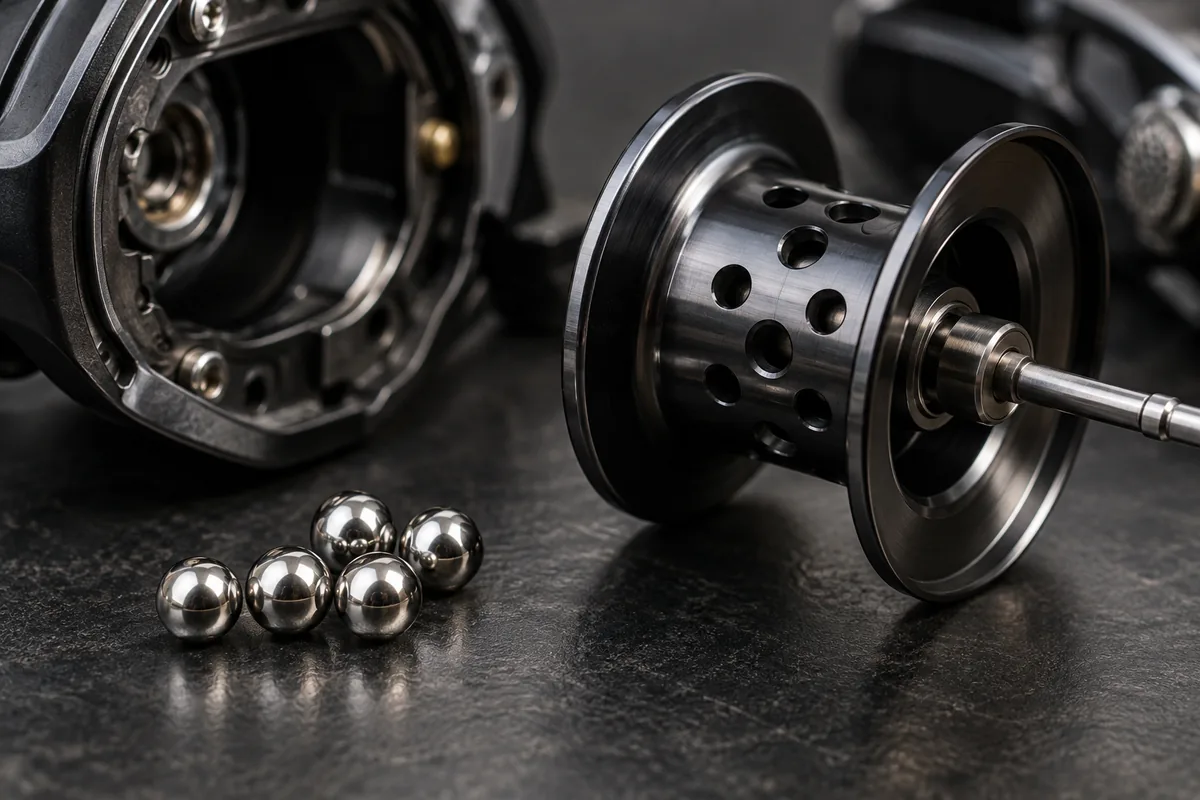
Bearings are small rings of balls that let parts spin smoothly. In a reel, they support the spool, the handle, and other moving parts, reducing friction so the reel casts and reels smoothly. Good bearings make a reel feel refined. Bad ones feel gritty and wear out fast, no matter how many there are.
The key point is that a bearing is only as good as its quality. A precise, sealed bearing runs smooth for years. A cheap, open one collects grit and roughens quickly. So the material and sealing matter far more than the raw count.
Where Bearings Matter Most
| Location | What it affects | Matters most? |
|---|---|---|
| Spool bearings | Casting smoothness and distance | Yes |
| Handle bearings | Retrieve smoothness | Yes |
| Level wind bearings | Line lay | Somewhat |
| Extra bearings | Marginal smoothness | Less |
The bearings that count are the spool bearings, which control casting, and the handle bearings, which control the retrieve feel. A reel with good bearings in these spots casts and reels smoothly. Extra bearings elsewhere add little, which is why a high total count does not guarantee a better reel.
Reading the Bearing Spec
When you see a bearing count, look deeper. A premium reel with six sealed, corrosion resistant bearings will feel and last better than a budget reel with eleven open ones. If a very cheap reel boasts a high count, treat it as a marketing number. Read reviews for how the reel actually feels and holds up over time.
For saltwater, sealing matters even more. Shielded or sealed bearings keep salt and grit out, which is the difference between a reel that lasts and one that seizes. Prioritize quality and sealing over the number every time.
How Many Is Enough
For most bass fishing, a reel with five to seven quality bearings is plenty. That covers smooth casting and retrieving without paying for extras that do little. Focus your money on a reel with good, sealed bearings in the spool and handle, and ignore the temptation of a big number on a cheap reel.
Frequently asked questions
Are more bearings better in a reel?
Not necessarily. Bearing quality matters more than count. A reel with five or six good sealed bearings often outperforms one with eleven cheap ones. A high count on a budget reel is usually a marketing number.
How many bearings is enough?
Five to seven quality bearings cover most bass fishing well, especially in the spool and handle. Beyond that, extra bearings add little. Focus on quality and sealing rather than the raw number.
What are shielded bearings?
Shielded bearings have a cover that keeps out grit and moisture, which helps them run smoothly and last longer. Sealed bearings go further and resist water, which is important for saltwater reels.
Do bearings affect casting?
Yes. The spool bearings affect how smoothly and far a reel casts. Good spool bearings let the spool spin freely and smoothly. That is why bearing quality in the spool matters more than the total count.