Best Baitcaster Combo for Salmon and Steelhead
This guide covers the baitcaster combo for salmon steelhead with hands on, tested picks.
Quick answer: Salmon and steelhead call for a longer 8 foot to 9 foot medium or medium heavy baitcaster with a line counter or high capacity reel and 15 to 30 pound line. The extra length controls drifts and float rigs, while a strong smooth drag protects light leaders against strong river fish.
Key takeaways
- Rod length jumps to 8 feet or more. Length controls the drift and mends line.
- Line counter reels shine for back trolling plugs at a set depth.
- A smooth drag protects light leaders against hard river runs.
- Great Lakes and Pacific Northwest anglers rig a bit differently. Match your water.

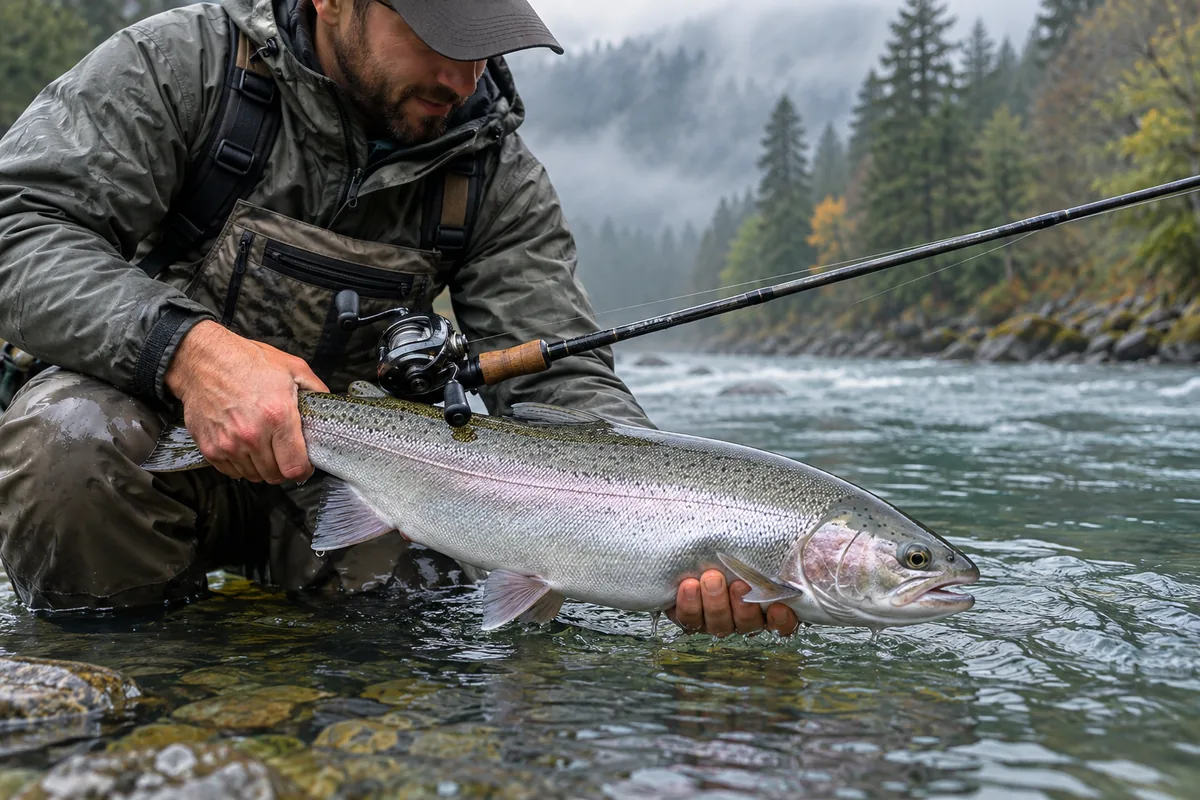
Salmon and steelhead fishing looks nothing like bass fishing. You drift baits through current, mend line across seams, and hang on when a chrome fish rips downstream. The gear reflects that. Longer rods and specialized reels do the work, and a bass combo is out of its depth here.
This guide covers the setups that put more of these fish on the bank. You learn why rods grow to eight feet and beyond, when a line counter reel helps, and picks matched to float fishing and plug pulling. The advice reflects how anglers rig on the Great Lakes tributaries and the rivers of the Pacific Northwest.
Why Rods Get Longer for River Fish
Length is the key spec here. An 8 foot to 9 foot rod does two jobs a short rod cannot. It controls a drift by letting you mend line across current, keeping your bait moving naturally. And it gives reach to steer a strong fish in fast water. Steelhead anglers in particular lean on long rods for float control.
The trade off is that these rods feel unwieldy for casting lures. That is fine, because most salmon and steelhead work is drifting and float fishing, not casting. You buy length for line control, not for distance.
What Matters, by Method
Float fishing and drifting
For float rigs and drift fishing, choose an 8 foot to 9 foot medium or medium light rod with a soft tip. The soft tip protects light leaders and shows the take, while the length mends line. Pair it with a reel that holds plenty of line, since a hot steelhead can run far.
Back trolling plugs
For pulling plugs behind a boat, a line counter reel earns its price. It lets you drop plugs to a set depth and repeat it exactly, which matters when fish hold at one level. Match it to a medium heavy rod with a moderate tip that loads as a fish grabs the plug.
Line and leader
Spool 15 to 30 pound braid or mono depending on method, and drop to a lighter fluorocarbon leader for clear water. A smooth drag is essential. These fish run hard and you fish light leaders, so a jerky drag pops the line right when the fight peaks.
The Best Salmon and Steelhead Combos for 2026
Confirm price and specs before buying.
| Pick | Best for | Rod | Reel | Line |
|---|---|---|---|---|
| Float rod combo | Best for steelhead | 9′ medium | High capacity | 15 to 20 lb |
| Line counter combo | Best for plugs | 8’6″ med heavy | Line counter | 20 to 30 lb |
| All around river combo | Best overall | 8’6″ medium | High capacity | 20 lb |
Best for steelhead: a float rod combo
A 9 foot medium float rod with a high capacity reel is the steelhead standard. The length mends line and controls a long drift, and the soft tip cushions a light leader. When a steelhead takes the float down and runs, the long rod and smooth drag keep you connected.
Best for plugs: a line counter combo
Back trolling plugs for salmon rewards precision, and a line counter reel delivers it. Set the same depth every pass on an 8 foot 6 inch medium heavy rod, and let the moderate tip load when a king slams the plug. This is a boat setup built for repeatable depth control.
How to Choose Yours
Pick by your main method and water. If you float fish rivers for steelhead, buy the long float rod. If you back troll plugs from a boat for salmon, buy the line counter combo. If you do a bit of both, an 8 foot 6 inch medium all around combo covers you. Then match line to clarity and always fish a smooth drag.
Regional note. Great Lakes tributary anglers often float fish light for steelhead, while Pacific Northwest anglers may run heavier for big kings. Adjust line strength to the fish you target and the water you fish.
Frequently asked questions
What rod length for steelhead?
Most steelhead float rods run 8 foot 6 inches to 9 feet or longer. The length mends line and controls the drift, and it gives reach to steer a running fish in current. Shorter rods struggle to control a float properly.
Do you need a line counter reel for salmon?
For back trolling plugs, yes, it helps a lot. A line counter lets you set plugs to the exact depth and repeat it. For float fishing and drifting, a high capacity reel without a counter works fine.
What line for steelhead float fishing?
Use 15 to 20 pound braid or mono as your main line, with a lighter fluorocarbon leader for clear water. A smooth drag protects the light leader when a steelhead makes a hard run.
Baitcaster or centerpin for steelhead?
Both catch steelhead. A baitcaster is more versatile and easier to learn, and it handles plugs and heavier presentations. A centerpin gives the most natural drift but has a steep learning curve. For most anglers, a baitcaster float combo is the practical choice.