

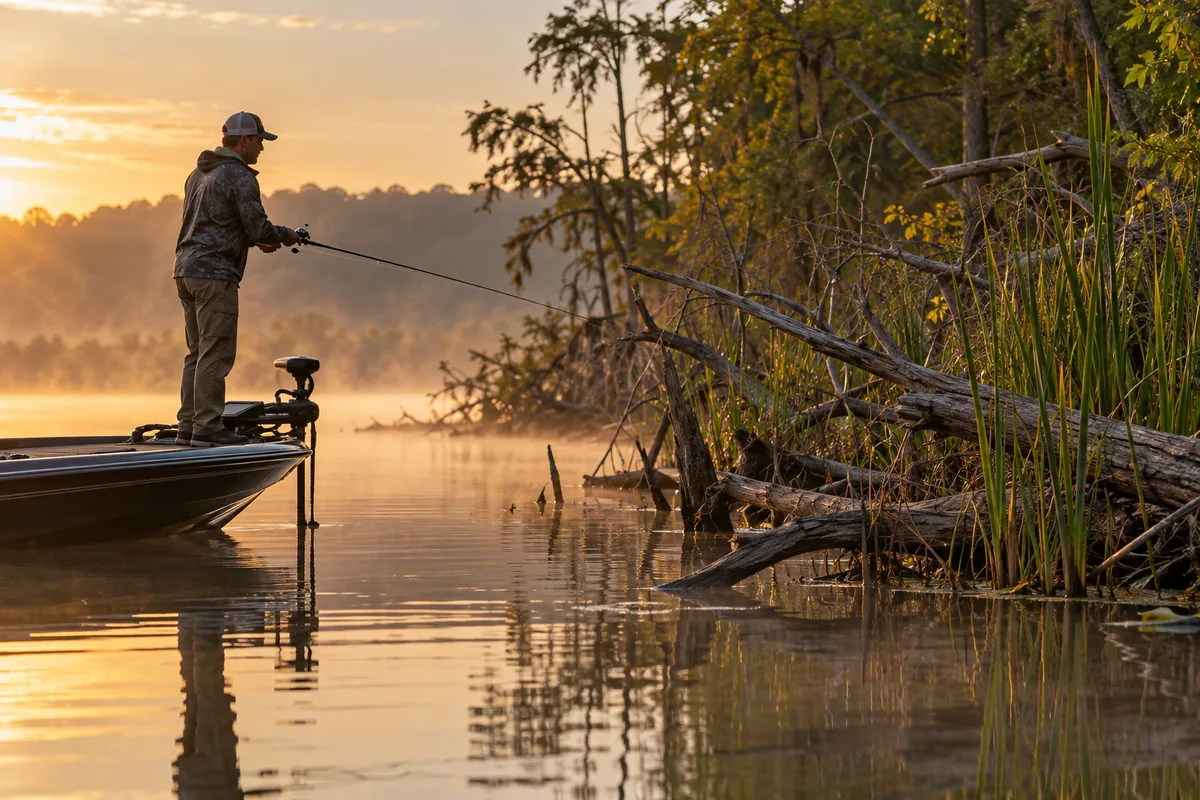
Best Baitcaster Combo for Flipping and Pitching
This guide covers the baitcaster combo for flipping pitching with hands on, tested picks.
Quick answer: Flipping and pitching call for a 7 foot 3 inch to 7 foot 6 inch heavy fast action baitcaster with a high 7.3:1 to 8.1:1 reel and 17 to 25 pound fluorocarbon or 50 pound braid. The long rod places quiet, accurate presentations into cover, and the fast reel picks up slack the instant a bass loads up.
Key takeaways
- Flipping and pitching are two different casts. Most guides blur them.
- A long, heavy rod gives reach and leverage to pull bass from cover.
- A fast 7.3:1 or quicker reel picks up slack for a hard, close hookset.
- Choose braid for thick grass, heavy fluorocarbon for wood and clearer water.

Flipping and pitching put a bait in front of bass that other anglers cannot reach. You slip a jig into a shady dock corner or a hole in the grass, so quietly the fish never spooks. When one bites, it is close and buried in cover, so you need to move it fast. This is precision fishing with power.
This guide sets you up for it. You learn the real difference between the two casts, the specs that place quiet presentations and win the close fight, and picks built for cover. The advice reflects how anglers work docks, laydowns, and matted grass.
Flipping vs Pitching, Made Clear
These are two casts, not one. Flipping uses a fixed length of line, around the length of the rod, that you swing to a close target with a low, quiet entry. You pull line from the reel with your free hand and never open the spool. It is for very close, precise drops.
Pitching opens the spool and lets a bait swing out on an underhand motion to targets a bit farther away, still with a soft entry. It covers more range than flipping. Both share the goal of a quiet presentation into cover, and both use the same heavy combo.
What Matters in a Flipping Combo
Rod power and length
Choose heavy power with a fast action in a 7 foot 3 inch to 7 foot 6 inch rod. The heavy power sets a stout hook and pulls a bass from cover. The length gives reach to targets and leverage to steer fish. A fast tip keeps the presentation accurate and sets the hook crisply.
Reel and gear ratio
Run a fast 7.3:1 to 8.1:1 reel. When a bass eats close and you set, the fast reel picks up slack instantly so the hook drives home. A high ratio also winches the fish up and out before it wraps you in cover. Speed is not optional here.
Line
Pick your line by the cover. In thick grass and mats, use 50 pound braid to cut through vegetation. In wood, docks, and clearer water, use 17 to 25 pound fluorocarbon for abrasion resistance and a lower profile. Match the line to what you flip into most.
The Best Flipping and Pitching Combos for 2026
Confirm price and specs before buying.
| Pick | Best for | Rod | Ratio | Line |
|---|---|---|---|---|
| Heavy flipping stick | Best overall | 7’6″ heavy, fast | 7.5:1 | 20 lb fluoro |
| Grass punch combo | Best for mats | 7’6″ heavy | 8.1:1 | 50 lb braid |
| 7’3″ flipping combo | Best for docks | 7’3″ heavy, fast | 7.3:1 | 20 lb fluoro |
| Value flipping combo | Best budget | 7’4″ heavy | 7.2:1 | 17 lb fluoro |
Best overall: a heavy flipping stick
A 7 foot 6 inch heavy fast rod with a 7.5:1 reel and 20 pound fluorocarbon covers most flipping and pitching. It places quiet presentations, sets a hook with authority, and steers bass out of cover. For an all around flipping setup, start here.
Best for docks: a 7 foot 3 inch flipping combo
Around docks, a slightly shorter 7 foot 3 inch rod pitches jigs into tight corners with control. The fast 7.3:1 reel picks up slack when a bass grabs the jig on the fall. Fluorocarbon resists abrasion on dock posts and cable. This is a precise, close range setup.
Best budget: a value flipping combo
You do not need to spend a lot to flip and pitch well. A value 7 foot 4 inch heavy combo with a fast reel and 17 pound fluorocarbon covers the technique. The finish is basic, but the power and speed are what matter, and this setup has both. A strong first flipping combo.
How to Choose and Fish Yours
Match line to cover, then commit to a heavy rod and a fast reel. If you fish mostly grass, spool braid. If you fish wood and docks, spool fluorocarbon. Keep your presentations quiet, since the whole point is to reach fish without spooking them.
Watch your line on the fall. Many flipping bites come as the bait sinks, showing as a twitch or a jump in the line rather than a thump. Set on anything that looks off, reel down fast, and drive the hook, then keep steady pressure to pull the fish clear of cover.
Frequently asked questions
What is the difference between flipping and pitching?
Flipping uses a fixed length of line swung to a close target with a quiet entry, without opening the spool. Pitching opens the spool and lets the bait swing out underhand to targets a bit farther away. Both aim for a soft, accurate presentation into cover.
What rod length for flipping?
A 7 foot 3 inch to 7 foot 6 inch heavy rod. The length gives reach to targets and leverage to pull bass from cover, while the heavy power and fast tip set a stout hook. Longer rods suit open grass, shorter ones suit tight docks.
What gear ratio for pitching?
A fast 7.3:1 to 8.1:1 reel. When a bass eats close and you set, the fast reel picks up slack instantly for a solid hookset, and it helps move the fish out of cover before it tangles.
Braid or fluoro for flipping?
Use braid in thick grass and mats, since it cuts through vegetation. Use 17 to 25 pound fluorocarbon in wood, docks, and clearer water for abrasion resistance and a lower profile. Match the line to the cover you flip into most.