Mono vs Fluoro vs Braid: Best Line by Technique
This guide covers the mono vs fluoro vs braid with hands on, tested picks.
Quick answer: Braid gives the most strength and no stretch, so it wins in heavy cover and for topwater. Fluorocarbon sinks and hides well, so it wins for finesse and bottom lures in clear water. Mono floats, stretches, and costs the least, so it wins for cranking and beginners.
Key takeaways
- Braid has no stretch and cuts through grass, so it suits frogs, punching, and flipping.
- Fluorocarbon sinks and nearly vanishes in water, so it suits jigs, worms, and clear lakes.
- Mono stretches and floats, which helps with treble hook baits and softens the fight.
- Many anglers use braid as a main line with a fluorocarbon leader to blend the best of both.

The three lines on the market do very different jobs. Pick the wrong one and you fight your own gear all day. Pick the right one and casting, feel, and hooksets all improve. This guide breaks down each line by the way you fish, so you can spool up with a clear plan.
What Each Line Does Well
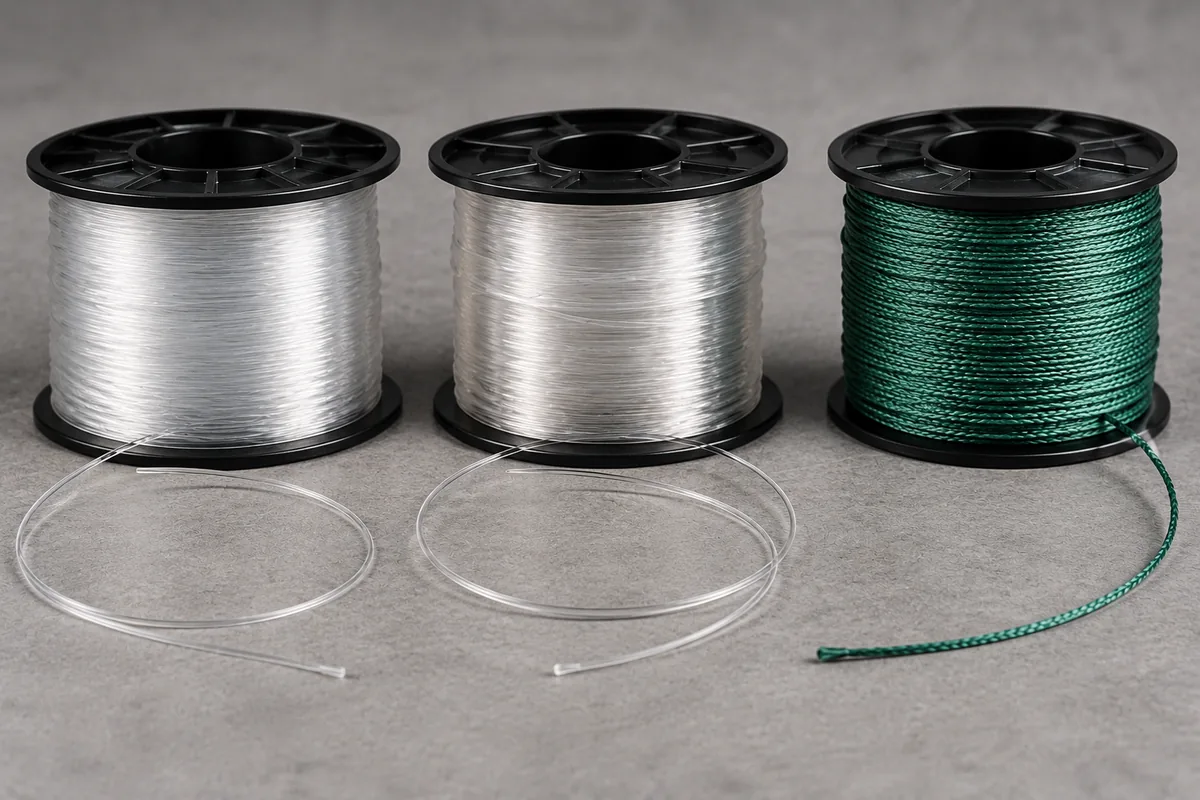
Monofilament is a single strand of nylon. It stretches, floats, and forgives small mistakes. That stretch acts like a shock absorber, which keeps trebles pinned during a headshake. It also costs the least, which is why so many people learn on it.
Fluorocarbon is a single strand too, but it sinks and bends light in a way that makes it hard for fish to see. It has low stretch and high abrasion resistance. Those traits make it a strong choice for bottom baits and clear water, where fish get a good look at your line.
Braid is many thin fibers woven together. It has almost no stretch, a thin diameter for its strength, and it floats. The lack of stretch gives you sharp hooksets and clear feel. The thin diameter lets you pack more line and cast a bit farther. The trade is that fish can see it, so many anglers add a leader.
Line Choice by Technique
| Technique | Best line | Why it fits |
|---|---|---|
| Frogs and topwater | Braid | No stretch for strong hooksets, and it floats to keep baits up. |
| Punching and flipping | Braid | Cuts through grass and pulls fish from thick cover. |
| Jigs and soft plastics | Fluorocarbon | Sinks, hides well, and sends bottom contact to your hand. |
| Finesse in clear water | Fluorocarbon | Low visibility fools wary fish that study the bait. |
| Crankbaits and treble baits | Monofilament | Stretch keeps trebles pinned and adds a little casting ease. |
| Beginners, all around | Monofilament | Forgiving, cheap, and easy to tie and manage. |
Use the chart as a starting point, then adjust for your water. The clearer the water, the more fluorocarbon helps. The thicker the cover, the more braid earns its place. When you throw baits with treble hooks, mono or a soft fluorocarbon keeps those small hooks from tearing free.
The Braid Plus Leader Method
Many bass anglers no longer pick just one. They spool braid for strength and thin diameter, then tie on a fluorocarbon leader for a low visibility finish near the bait. This blends braid feel with fluorocarbon stealth. It shines when you fish clear water but still want the backbone braid gives. A double uni knot or an FG knot joins the two lines well.
Diameter and Casting on a Baitcaster
Line diameter changes how a baitcaster behaves. Thin braid can dig into the spool under load, so a mono or fluorocarbon backing under the braid prevents slip. Thicker mono and fluorocarbon cast a touch shorter than braid of the same strength, since they take up more room and catch more air. Match the line to the reel size and the lure weight, and your casts stay smooth.
How to Choose
Start with the technique, then read the water. Reach for braid when cover is thick or you need a hard hookset. Reach for fluorocarbon when water is clear or the bait rides the bottom. Reach for mono when you throw treble baits or you want the easiest line to learn on. Match the line to the job, and every part of the cast to catch improves.
Frequently asked questions
Is braid or fluorocarbon better for a baitcaster?
It depends on the technique. Braid is better for heavy cover and topwater because it has no stretch and floats. Fluorocarbon is better for bottom baits and clear water because it sinks and hides. Many anglers use braid with a fluorocarbon leader to get both.
What line is best for beginners on a baitcaster?
Monofilament is best for beginners. It stretches, which forgives small mistakes, and it costs the least. It is also easy to tie and manage. Start with 12 to 15 pound mono, learn to control the reel, then branch into fluorocarbon and braid as your needs grow.
Why do anglers use a fluorocarbon leader with braid?
Braid is strong and thin but easy for fish to see. A fluorocarbon leader adds a low visibility section near the bait, so wary fish still bite. The braid gives strength and feel, and the leader gives stealth. It is a common setup for clear water bass fishing.
Does braid need a mono backing on a baitcaster?
Often yes. Thin braid can slip and dig into the spool under load. A short mono or fluorocarbon backing grips the spool first, then the braid ties to it. This stops the slip and saves line, since you use less braid to fill the reel.
11 Comments