What Pound Line for a Baitcaster, by Species and Lure
This guide covers the what pound line with hands on, tested picks.
Quick answer: Match line strength to the fish and cover. Use 8 to 12 pound for finesse and clear water, 12 to 17 pound for all around bass, 20 to 30 pound for heavy cover, and 40 to 65 pound braid for frogs, punching, and pike. Heavier line handles bigger fish and thicker cover but casts a little shorter.
Key takeaways
- Line strength follows the fish and the cover, not a single number.
- Lighter line casts farther and hides better in clear water.
- Heavier line handles big fish and cuts through thick cover.
- Baitcasters handle heavier line than spinning reels.

Pick the wrong line strength and you either break off on a big fish or spook wary ones with heavy line. The right pound test balances strength, casting, and stealth for your situation. This guide gives a clear chart so you always match line to the job. It is a quick reference you will use often.
You learn how to choose line strength by species, cover, and technique, and why baitcasters let you fish heavier than spinning gear. Keep it handy when you spool up.
How to Think About Line Strength
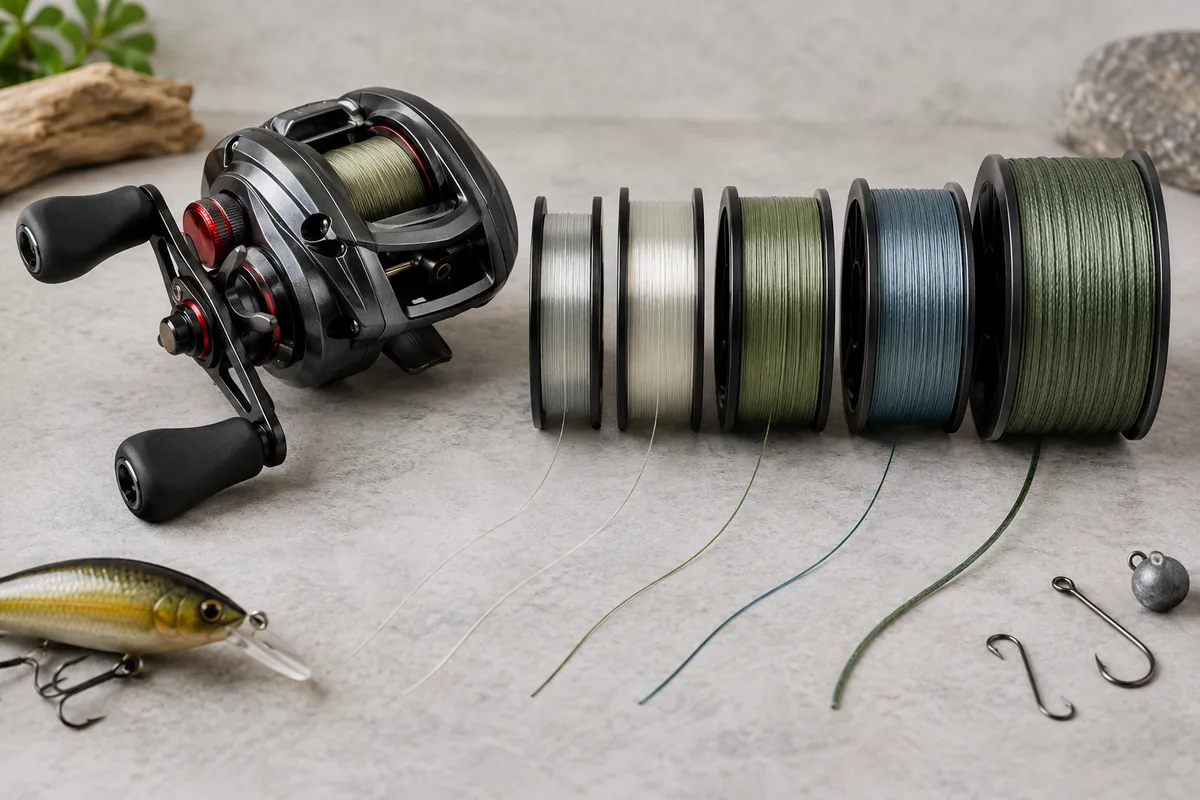
Two forces pull in opposite directions. Lighter line casts farther and hides better, which helps in clear water and with finesse baits. Heavier line handles big fish and cuts through cover, which helps in grass and around wood. Your job is to pick the lightest line that still handles the fish and cover you face.
Baitcasters give you room here. They handle heavier line than spinning reels without trouble, which is why power techniques live on baitcasters. Use that strength when the cover demands it, and drop lighter for clear water finesse.
Line Strength by Species and Technique
| Species or technique | Line type | Pound test |
|---|---|---|
| Finesse, clear water | Fluorocarbon | 8 to 12 lb |
| All around bass | Fluorocarbon or braid | 12 to 17 lb |
| Heavy cover bass | Braid or heavy fluoro | 20 to 30 lb |
| Frogs, punching | Braid | 40 to 65 lb |
| Pike, musky | Braid plus leader | 30 to 100 lb |
| Catfish, saltwater | Braid or heavy mono | 20 to 50 lb |
Use this as a starting point, then adjust for your water. Clearer water and wary fish call for the lighter end. Thicker cover and bigger fish call for the heavier end. When you target toothy fish like pike and musky, add a leader on top of your line, since teeth cut through even heavy line.
The Casting Trade Off
Remember that heavier line casts a little shorter. Thicker line has more air and spool resistance, so it does not fly as far. That is fine in heavy cover, where you fish close, but it matters on open water where distance helps. Balance the strength you need against the distance you want.
How to Choose
Start with the species and cover, then pick the line type and strength from the chart. Lean lighter in clear water and open cover, heavier in grass and around big fish. Add a leader for toothy species. Match the line to the fish and the fight, and you will land more of what you hook.
Frequently asked questions
What pound line for bass?
Use 12 to 17 pound for all around bass, 8 to 12 pound for finesse in clear water, and 20 pound or heavier braid for heavy cover. Match the strength to the cover you fish and how wary the bass are.
What line for heavy cover?
Use 20 to 30 pound braid or heavy fluorocarbon for heavy cover, and 40 to 65 pound braid for frogs and punching. Braid cuts through grass and gives the strength to pull fish from thick cover.
Does heavier line cast shorter?
Yes. Thicker line has more air and spool resistance, so it flies a little shorter. That is fine in heavy cover where you fish close, but on open water, lighter line adds distance. Balance strength against the distance you need.
What braid strength for pike?
Use 30 to 50 pound braid for pike, with a wire or heavy fluorocarbon leader on top. Musky call for 65 to 100 pound braid with a heavy leader. The leader protects against teeth that cut through even heavy line.
5 Comments