How to Put Line on a Baitcaster the Right Way
Here is how to put line, explained in simple, tested steps.
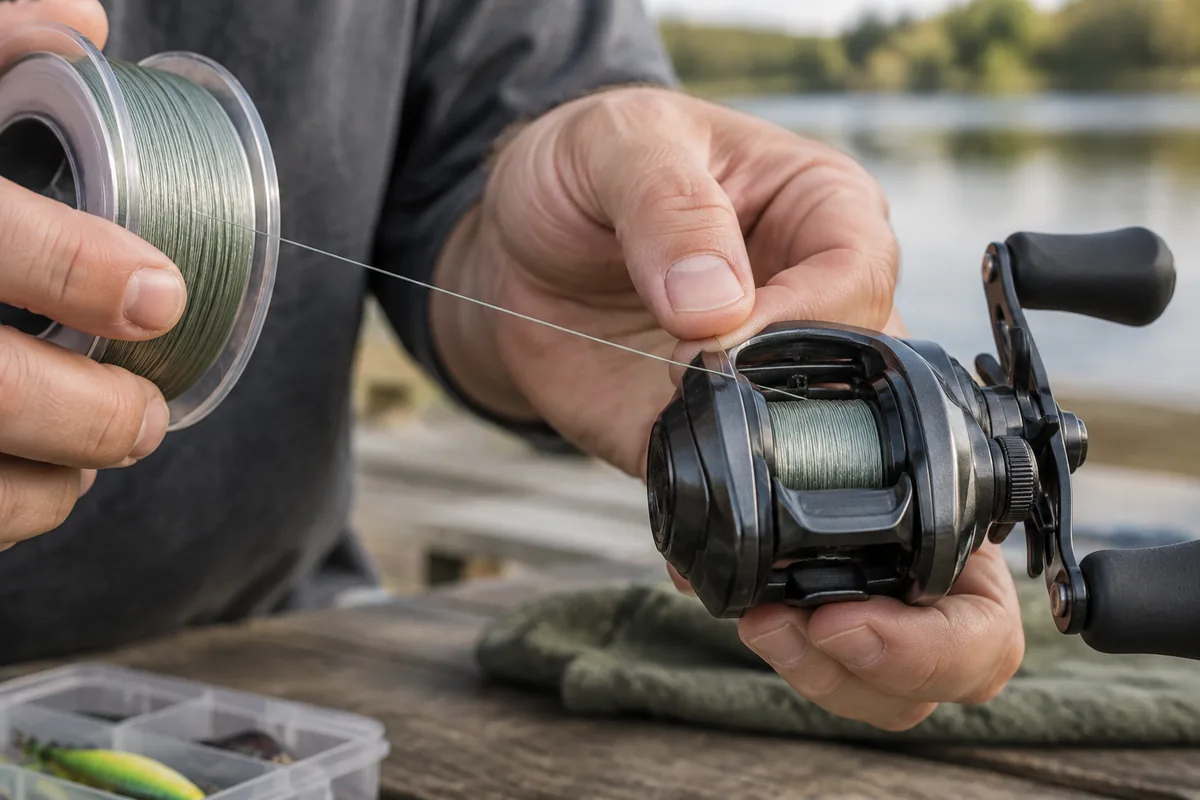
Quick answer: To spool a baitcaster, run the line through the guides, tie it to the spool with an arbor knot, keep light tension with a cloth or your fingers, and reel slowly until the line sits about one eighth inch below the spool rim. Even tension is what prevents dig in and casting problems later.
Key takeaways
- Keep steady tension while spooling. Loose line digs in and causes backlash.
- Fill to about one eighth inch below the rim, never to the top.
- Braid can slip on a bare spool, so add mono backing or tape first.
- Let the line come off the filler spool the right way to avoid twist.

Spooling seems simple, but do it wrong and you fight backlash all day. Loose or overfilled line is the hidden cause of many tangles. Spool it right, with even tension and the correct fill, and your reel casts clean from the first throw. This guide walks you through it step by step.
You learn the exact process, the tension detail most people skip, and the braid backing trick that stops slip. Follow these steps and your line will lay smooth and cast well.
What You Need
Gather your reel, your line, and a helper or a way to hold the filler spool. A pencil through the filler spool lets someone hold it, or a spooling station does the same. Have a cloth or glove to keep tension, and scissors to trim. That is all it takes.
Step by Step
| Step | What to do | Common mistake |
|---|---|---|
| 1 | Run line through the rod guides to the reel | Skipping a guide |
| 2 | Tie the line to the spool with an arbor knot, trim the tag | A weak knot that slips |
| 3 | Hold light tension with a cloth on the line | Loose line that digs in later |
| 4 | Reel slowly and evenly, keeping the line under tension | Reeling too fast |
| 5 | Stop at one eighth inch below the spool rim | Overfilling to the top |
The key step is tension. Pinch the line lightly through a cloth as you reel, so it lays onto the spool tight and even. Loose line buries into the layers below when you set the hook, then jumps out as a backlash on your next cast. Steady tension prevents that.
The Braid Backing Trick
Braid is slick, so it can slip and spin on a bare spool when you fight a fish. To stop this, first put down a short layer of monofilament backing, or wrap a strip of electrical tape on the spool, then tie your braid to that. The backing or tape grips the braid so it cannot slip. Fluorocarbon and mono grip the spool fine on their own.
How Full Should You Fill It
Fill to about one eighth inch below the spool rim. This is the sweet spot. Too full, and line jumps off in loose coils that backlash. Too empty, and you lose casting distance because the line has to climb over the spool edge. Aim just below the rim for the best casts.
Avoiding Line Twist
Let the line come off the filler spool the right way. For a baitcaster, the filler spool should turn so the line comes off in the same direction it goes onto your reel, which usually means the label faces up as the spool turns. If you see the line twisting or coiling, flip the filler spool. A little care here saves tangles later.
Frequently asked questions
How full should a baitcaster be?
Fill to about one eighth inch below the spool rim. Too full causes backlash from loose coils, and too empty costs casting distance. Just below the rim gives the best casts.
Do you need backing for braid?
Yes, usually. Braid is slick and can slip on a bare spool. Add a short layer of monofilament backing or a strip of tape first, then tie the braid to that so it grips and cannot spin.
What knot for spooling a baitcaster?
An arbor knot ties the line to the spool. It cinches down tight against the spool and holds the line in place. Trim the tag end close after tying so it does not catch line as you spool.
Why does my line dig into the spool?
Because you spooled it without enough tension. Loose line buries into the layers below when you set the hook, then jumps out as a backlash. Re spool with steady tension using a cloth to hold the line tight.