Best Baitcaster Combo for Striped Bass and Hybrids
This guide covers the baitcaster combo for striped bass with hands on, tested picks.
Quick answer: Striped bass reward a 7 foot to 7 foot 6 inch medium heavy or heavy baitcaster with a strong drag, a 6.3:1 to 7:1 reel, and 30 to 65 pound braid. The setup must throw big swimbaits and live bait and hold up to long, powerful runs from fish that often top ten pounds.
Key takeaways
- Drag capacity decides landed fish. Stripers run long, and a weak drag fails.
- Match the gear to your water. Reservoir fish differ from coastal fish in size and salt.
- Medium heavy handles most stripers. Step to heavy for big swimbaits and umbrella rigs.
- Use 30 to 65 pound braid to move heavy baits and stop a strong fish.

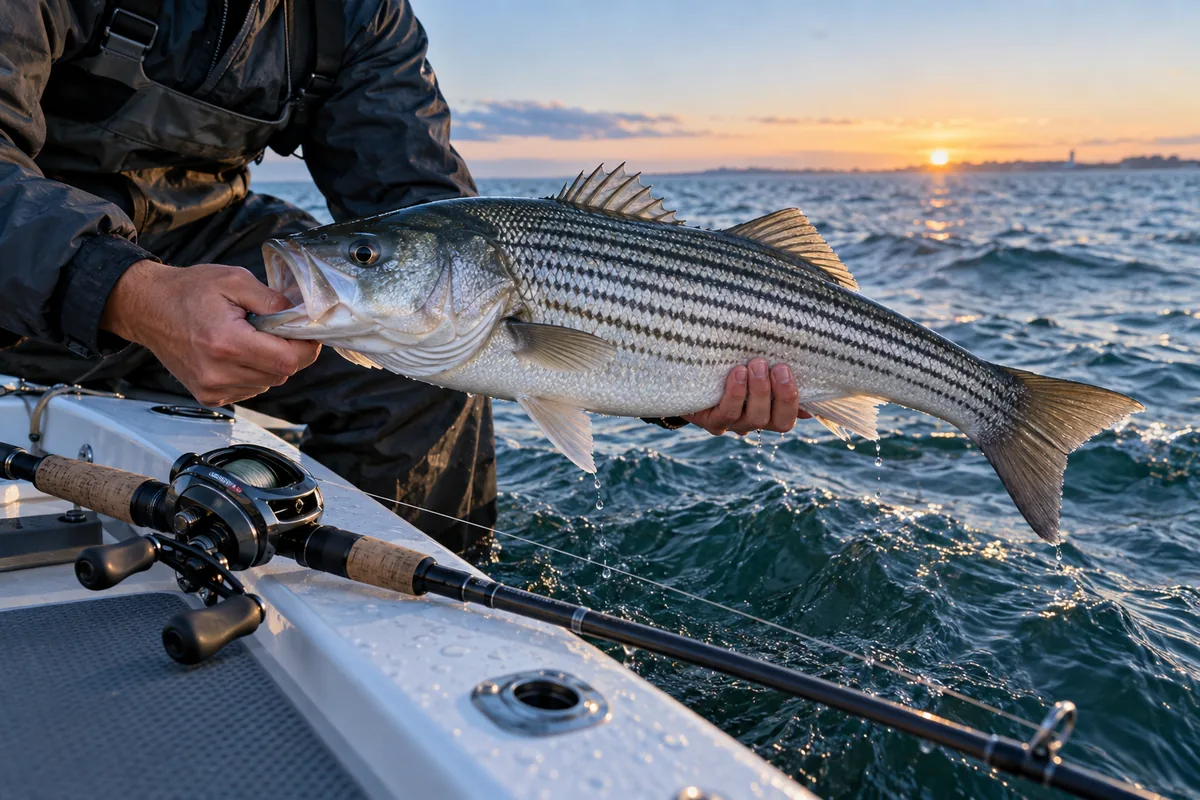
Striped bass pull like freight trains. A ten pound striper makes a run that a bass reel was never built for, and a hybrid striper packs the same power into a smaller frame. If your drag stutters or your rod folds, the fish wins. Landing stripers is about gear that holds up under sustained force.
This guide sets you up for that fight. You learn how reservoir and coastal setups differ, the specs that survive a long run, and picks matched to your water. The advice leans on maker specs and reports from anglers who chase stripers on lakes and along the coast.
Reservoir Stripers vs Coastal Stripers
Where you fish changes the gear. Reservoir and lake stripers live in fresh water, so a strong freshwater reel works, and you often throw swimbaits or pull live shad. Coastal stripers live in salt, so you need corrosion resistance, and you may cast bigger baits into current.
Both share one demand, a drag that holds through a long run. The difference is salt. If you fish the coast, choose a sealed, salt rated reel. If you fish a reservoir, a stout freshwater reel is fine, but still buy one with real drag capacity.
What Matters in a Striper Combo
Rod power and length
Choose medium heavy for most stripers, in a 7 foot to 7 foot 6 inch rod. Medium heavy casts swimbaits and handles hard runs. Step up to heavy power when you throw large swimbaits or umbrella rigs, which are heavy enough to overload a lighter rod. The longer length adds casting distance to reach schooling fish.
Reel, ratio, and drag
A 6.3:1 to 7:1 reel balances power and line pickup. More important is drag capacity. Look for a reel that lists a strong maximum drag and a smooth feel, because a striper run tests it to the limit. A reel with a weak or jerky drag loses these fish at the worst moment.
Line
Spool 30 to 65 pound braid. The strength moves heavy baits and stops a strong fish, and braid’s thin diameter still casts well. For clear water or wary fish, add a fluorocarbon leader. In heavy current with big baits, straight braid keeps you connected with no stretch.
The Best Striper Baitcaster Combos for 2026
Confirm price and specs before buying.
| Pick | Best for | Rod | Ratio | Braid |
|---|---|---|---|---|
| Medium heavy reservoir combo | Best overall | 7’3″ med heavy | 6.8:1 | 40 lb |
| Heavy swimbait combo | Best for big baits | 7’6″ heavy | 6.3:1 | 50 to 65 lb |
| Sealed coastal combo | Best for salt | 7’3″ med heavy | 7:1 | 40 lb |
| Live bait combo | Best for live bait | 7′ medium heavy | 6.3:1 | 30 to 40 lb |
Best overall: a medium heavy reservoir combo
A 7 foot 3 inch medium heavy rod with a strong drag reel and 40 pound braid covers most striper fishing. It casts swimbaits, handles live bait, and holds up to the runs that define this fish. For lake and reservoir stripers, start here.
Best for big baits: a heavy swimbait combo
Big stripers eat big baits, and large swimbaits and umbrella rigs need a heavy rod. A 7 foot 6 inch heavy blank with a 6.3:1 reel and 50 to 65 pound braid launches these baits and drives the hook. The slower ratio adds cranking power for the weight.
Best for salt: a sealed coastal combo
Coastal stripers demand corrosion resistance. A sealed, salt rated reel on a 7 foot 3 inch medium heavy rod casts into current and shrugs off spray. Rinse it after each trip. The 7:1 ratio helps pick up slack fast when a fish charges on the retrieve.
How to Choose and Fight Yours
Pick by your baits and water. If you throw mid size swimbaits or pull live bait on a lake, medium heavy is right. If you throw the biggest baits, go heavy. If you fish salt, choose sealing first. Then set your drag with care, firm enough to steer the fish but smooth enough to give line on a run.
During the fight, let the drag work. A striper’s first run is its strongest, so keep steady pressure and do not clamp down. Reservoir fish and coastal fish both reward patience over muscle. A smooth drag and a strong rod win where brute force fails.
Frequently asked questions
What size reel for striped bass?
A 200 to 300 size reel with strong drag capacity. Reservoir fish suit a stout freshwater 200. Coastal fish need a sealed, salt rated reel, often a 200 or 300, to hold heavy braid and survive salt.
Baitcaster or spinning for stripers?
Baitcaster for heavy swimbaits, umbrella rigs, and live bait, where power and control help. Spinning suits lighter lures and long casts to breaking fish. Many striper anglers carry both and match the reel to the bait.
What line for striped bass?
Use 30 to 65 pound braid. The strength moves heavy baits and stops long runs. Add a fluorocarbon leader in clear water. Go heavier for big swimbaits and umbrella rigs, lighter for live bait and smaller lures.
What rod for umbrella rigs?
A heavy 7 foot 6 inch rod. Umbrella rigs weigh several ounces, which overloads a medium heavy rod. Heavy power casts the weight and drives the hook, and a slower reel ratio adds cranking power.