Baitcaster Reel Sizes Explained: What 100, 150, and 200 Really Mean
This guide covers the baitcaster reel sizes with hands on, tested picks.
Quick answer: Baitcaster size numbers like 100, 150, and 200 describe spool and line capacity, not the physical size of the reel. A 100 or 150 holds enough line for most bass fishing. A 200 or larger suits heavy line, big baits, and saltwater. Higher numbers mean more line and usually a bit more weight.
Key takeaways
- The number is about line capacity, not how big the reel feels in your hand.
- A 150 covers most freshwater bass fishing. It is the safe default size.
- Go up to 200 or 300 for heavy braid, big swimbaits, catfish, and saltwater.
- Sizes are not standard across brands. A Shimano 150 and a Daiwa 150 can differ.
- Match the size to your line and target fish, then check the reel’s capacity rating.

You pick up two baitcasters that look almost identical. One says 100. One says 200. They feel about the same size in your palm. So what does the number even mean, and does it change how the reel fishes? New buyers ask this every day, and the answer is simpler than the marketing makes it seem.
Below you learn what these numbers describe, why one brand’s 150 is not another brand’s 150, and how to match a size to your fishing in under a minute. By the end, a spec sheet will read like plain English.
What the Size Number Actually Describes
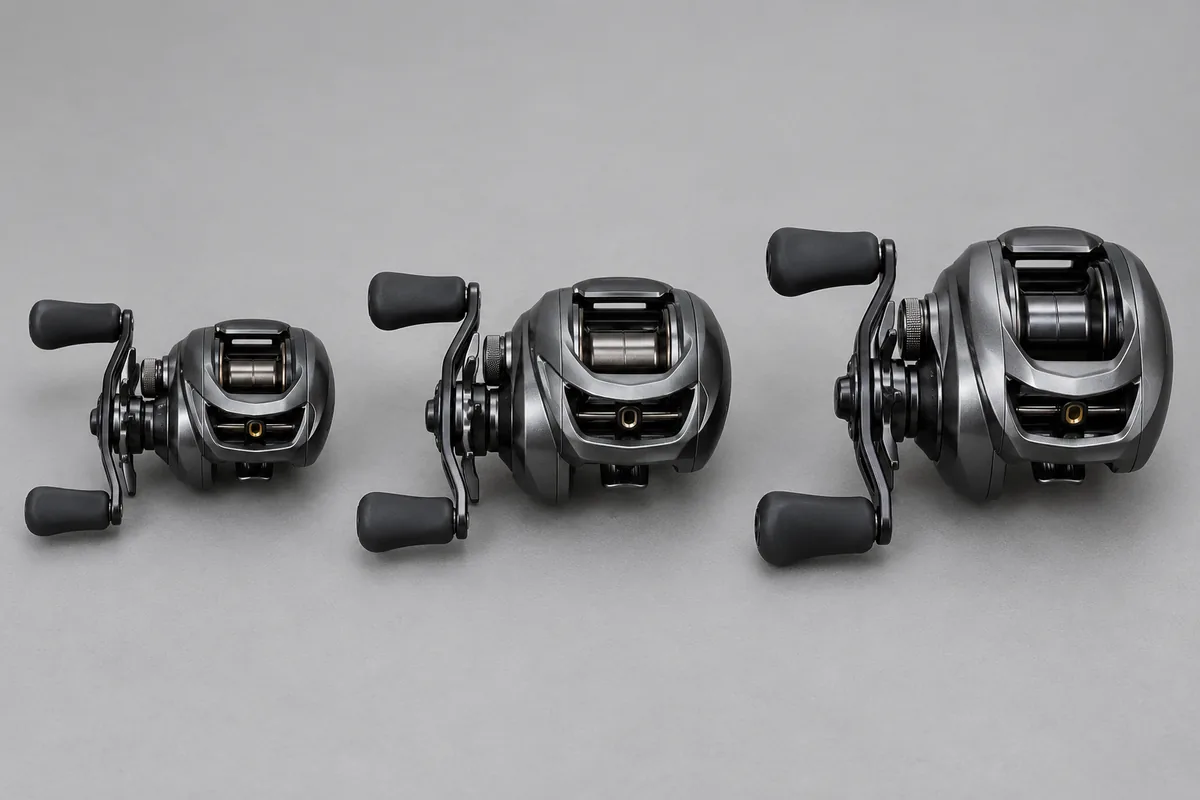
The number points to the spool and how much line it holds. A bigger number means a deeper or wider spool that packs on more line. It does not describe the outside dimensions of the reel. Two reels can wear the same 150 label and palm nearly the same, yet hold different amounts of line depending on the spool design.
Think of it like a spool of thread. A larger spool holds more thread, even if the plastic frame around it looks similar. On a reel, more line means longer casts before you run out, more cushion when a big fish makes a long run, and room for thicker line.
100, 150, 200, and Beyond
Here is what each common size means in real fishing terms. Use it as a starting map, then confirm the exact capacity printed on the reel you want.
| Size | Typical braid capacity | Typical mono capacity | Best for |
|---|---|---|---|
| 70 to 100 | ~120 yd of 20 lb | ~90 yd of 10 lb | Finesse, light lures, small reels |
| 150 | ~150 yd of 30 lb | ~110 yd of 12 lb | All around bass fishing |
| 200 | ~190 yd of 40 lb | ~140 yd of 15 lb | Heavy cover, big baits, light salt |
| 300 and up | ~250 yd of 50 lb | ~200 yd of 20 lb | Catfish, musky, saltwater, trolling |
The 70 to 100 range covers small, light reels built for finesse and light lures. Many bait finesse reels live here. They hold less line, but you rarely need much for close range casting.
The 150 is the workhorse. It holds enough braid or mono for nearly all bass fishing and balances well on a 7 foot rod. If you buy one baitcaster and fish for bass, this is your size.
The 200 steps up for heavy line and bigger lures. It gives you room for 40 pound braid, more cushion on long runs, and the capacity for swimbaits or light inshore work. The 300 and larger sizes move into catfish, musky, and saltwater, where line capacity and drag endurance decide the fight.
Why Brands Do Not Agree on Sizes
Here is the detail most guides skip. There is no industry standard for these numbers. A Shimano 150 and a Daiwa 150 can hold different amounts of line, because each brand sets its own scale. Some brands even split sizes into shallow and deep spool versions under the same number.
So never buy on the size number alone. Read the line capacity chart printed on the box or the maker’s website. That chart tells you the real yardage for each line type. The size label is a quick guide. The capacity chart is the truth.
How to Pick the Right Size for You
Start with your target fish. For bass, a 150 covers you. For catfish, musky, or saltwater, step up to 200 or 300 for line and drag. For finesse and light lures, a small 70 to 100 balances better on a light rod.
Next, think about line. Braid is thin, so a 150 packed with braid holds plenty for most casts. If you fish thick mono or heavy fluorocarbon, you use more spool, so a slightly larger size gives breathing room. Check the capacity chart for the exact line you plan to spool.
Last, balance the combo. A large reel on a light rod feels nose heavy, and a tiny reel on a heavy rod runs out of line on a big fish. Pair a 150 with a 7 foot medium heavy bass rod, and match larger reels to longer, stronger rods.
Common Mistakes to Avoid
Do not assume a bigger number means a bulkier reel. Modern 150 and 200 reels often palm almost the same. The number lives in the spool, not the shell.
Do not overfill or underfill the spool. Fill to about an eighth inch below the rim, whatever the size. Overfilling causes backlash, and underfilling shortens your cast.
Do not ignore line type when reading capacity. The same reel holds far more braid than mono, because braid is thinner. A capacity of 100 yards of 12 pound mono might mean 150 yards or more of 30 pound braid.
Frequently asked questions
What size baitcaster do I need for bass?
A 150 is the standard size for bass. It holds enough braid or mono for nearly every bass technique and balances well on a 7 foot rod. Step up to a 200 only for big swimbaits or very heavy cover.
What does 150 mean on a reel?
It describes the spool and line capacity, not the outside size of the reel. A 150 holds a mid amount of line, enough for most bass fishing. Check the capacity chart for exact yardage by line type, since brands set their own scales.
Are reel sizes the same across brands?
No. There is no industry standard, so a Shimano 150 and a Daiwa 150 can hold different amounts of line. Always read the maker’s line capacity chart rather than trusting the size number alone.
What size reel do I need for saltwater?
Step up to a 200, 300, or larger for inshore and coastal fishing. Bigger sizes hold more heavy line and shed heat on long runs. Also choose a sealed, corrosion resistant reel so salt does not ruin it.
One Comment