

Disclosure: BaitcasterCombo.com is reader-supported. We may earn a commission when you buy through links on this page, at no extra cost to you. As an Amazon Associate I earn from qualifying purchases. How this works.
FAQs
Frequently Asked Questions About Baitcaster Combos
Have questions about choosing the right baitcaster combo? Find answers to the most common questions about baitcaster reels, rod selection, gear ratios, casting techniques, maintenance, and more. Our goal is to help anglers of all skill levels find the perfect setup for a better fishing experience on the water.
A baitcaster combo is a matched low-profile baitcasting reel and rod sold together as a balanced unit. It gives you more casting control and power for heavier lines and lures than spinning gear, which makes it popular for bass, pike, and catfish. In practice, buying them as a matched set takes the guesswork out of pairing components: the rod’s power and action are already suited to the reel’s line capacity and drag, so it casts and fights fish the way the maker intended right out of the box.
A good beginner combo has an easy-to-adjust magnetic braking system to prevent backlashes and a forgiving price. The KastKing Centron (7.1:1, 10-magnet external braking, around $60) is a popular starting point. For a first setup, look for a 6’6″ to 7′ medium or medium-heavy rod paired with a 6.3:1 to 7.1:1 reel and a strong magnetic brake, which is forgiving enough to learn on but still capable once your thumb control improves.
A 7.1–7.2:1 gear ratio is the most versatile all-purpose choice. Higher ratios (8:1+) suit fast techniques like flipping and frogging; lower ratios (5–6:1) give more power for deep crankbaits and big swimbaits. As a rule of thumb, 5:1 to 6:1 gives more torque for deep crankbaits and big swimbaits, 6:1 to 7:1 is the do-everything range for most anglers, and 7:1 and up shines for fast presentations like flipping, pitching, and burning lipless baits.
A 6’6″ to 7′ medium to medium-heavy rod paired with a 7:1 reel covers the large majority of bass fishing, from crankbaits to jigs and Texas rigs. For most bass fishing a 7′ medium-heavy rod with fast action handles the widest range of lures, from jigs and Texas rigs to spinnerbaits; step up to a heavier 7’3″ to 7’6″ rod when you are throwing frogs or pulling fish out of heavy cover.
Yes, within limits. Budget combos cast well and land fish for a fraction of premium prices, and owners regularly report years of use. The trade-offs are less refined components and occasional quality-control issues, so inspect your gear and buy from a seller with easy returns. Today’s budget combos from KastKing, Abu Garcia, and Lew’s are genuinely capable. The usual trade-offs are a slightly heavier reel, fewer bearings, and a less refined drag, none of which stop you from catching fish while you build skill.
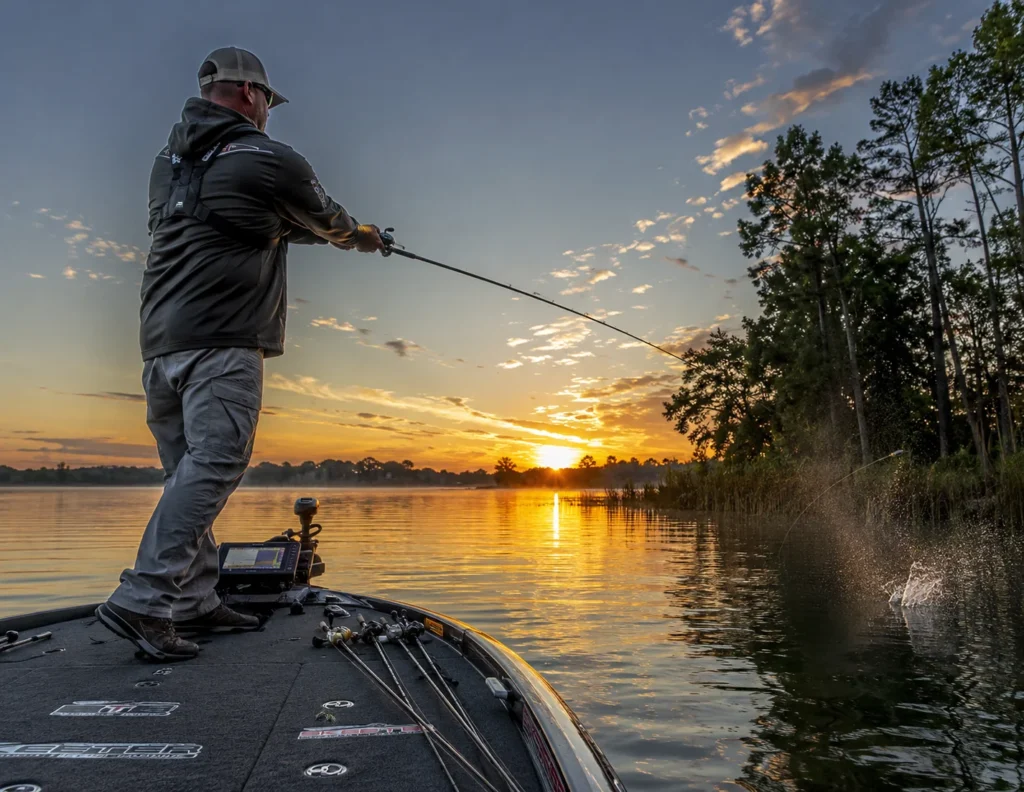
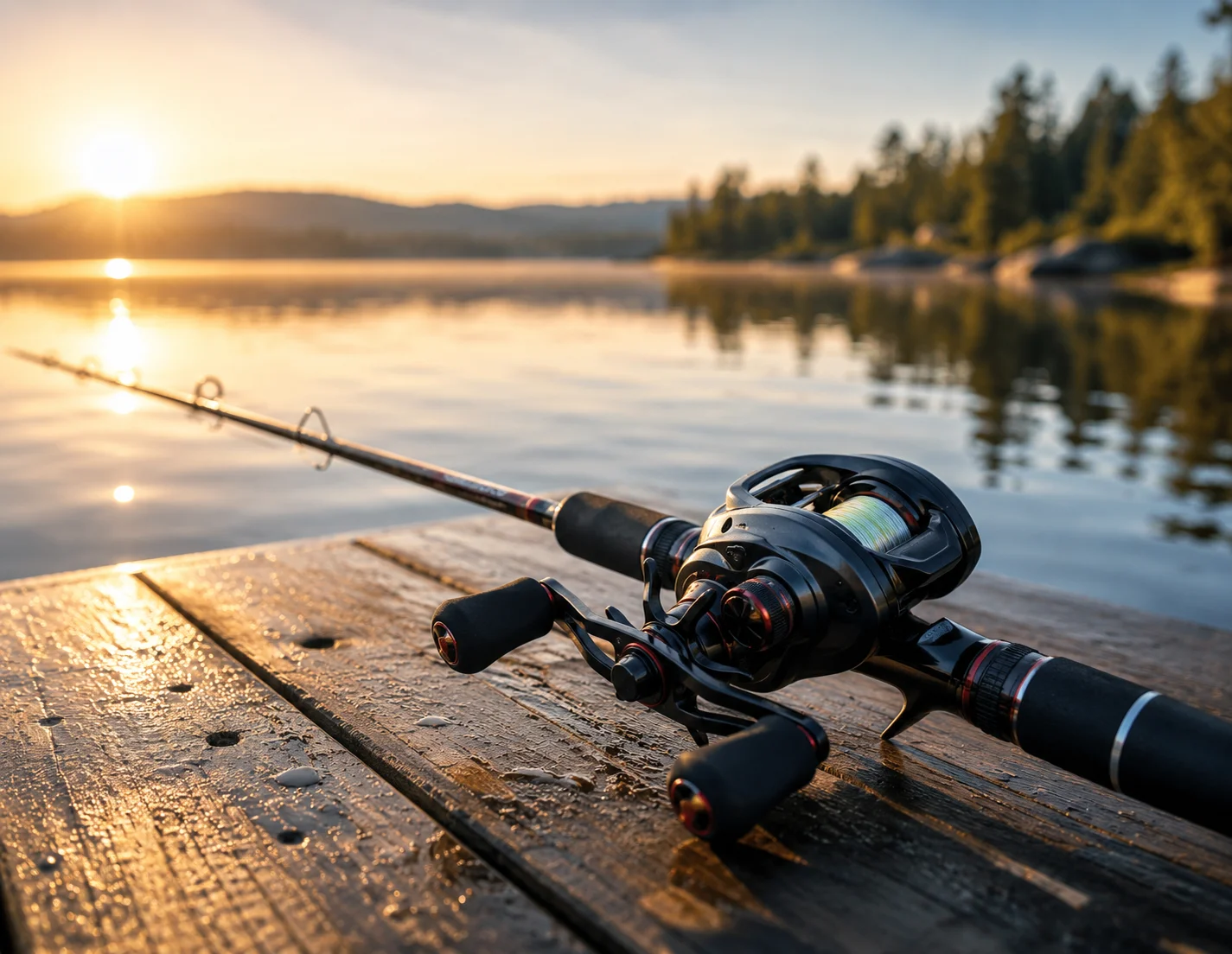
Tighten the spool tension knob until a lure falls slowly when released, set the magnetic brakes higher while learning, and feather the spool with your thumb at the end of each cast. Ease the brakes off gradually as your timing improves. Set the spool tension so a lure falls slowly and stops when it lands, keep the brakes on the higher side while you learn, and feather the spool with your thumb at the end of each cast; smooth, controlled casts prevent far more overruns than hard, fast ones.
Braided line (30–50 lb) is popular for its thin diameter and sensitivity, often with a fluorocarbon leader. Monofilament (12–17 lb) is more forgiving and cheaper — a good choice while you’re learning. Match the line to the rod’s rated range. Braid in 30 to 50 lb is a versatile all-round choice, fluorocarbon in 12 to 17 lb suits clear water and bottom-contact baits, and monofilament in 12 to 15 lb adds forgiving stretch for treble-hook lures like crankbaits and topwater.
Choose a baitcaster for more casting control, heavier lures, and fishing in cover once you’re willing to learn the technique. Choose spinning gear for light lures and an easier learning curve. Many anglers own both. Baitcasters win on casting accuracy, power, and line control for heavier lures and cover, while spinning gear is easier to learn and better with light lines and finesse baits, so plenty of anglers keep one of each for different situations.
Rinse and wipe it down after use (especially in saltwater), keep the spool and level-wind clean, add reel oil to the bearings and grease to the gears periodically, and check that screws stay tight. Inspect the rod tip and guides before each trip. After saltwater or heavy use, wipe everything down, add a drop of reel oil to the spool bearings and a little grease to the gears, back the drag off between trips to protect the washers, and store the combo out of direct sunlight.
Our “Buy Now” buttons take you directly to the product on Amazon, where you complete your purchase with the protection of Amazon’s shipping, returns, and customer-service policies. Prices shown on our site are a guide — the price at checkout is always current. Each combo we feature links to its current listing so you can check today’s price and availability before buying, and as an Amazon Associate we may earn a small commission at no extra cost to you.