How to Remove a Bird’s Nest From a Baitcaster
Here is how to fix a baitcaster, explained in simple, tested steps.
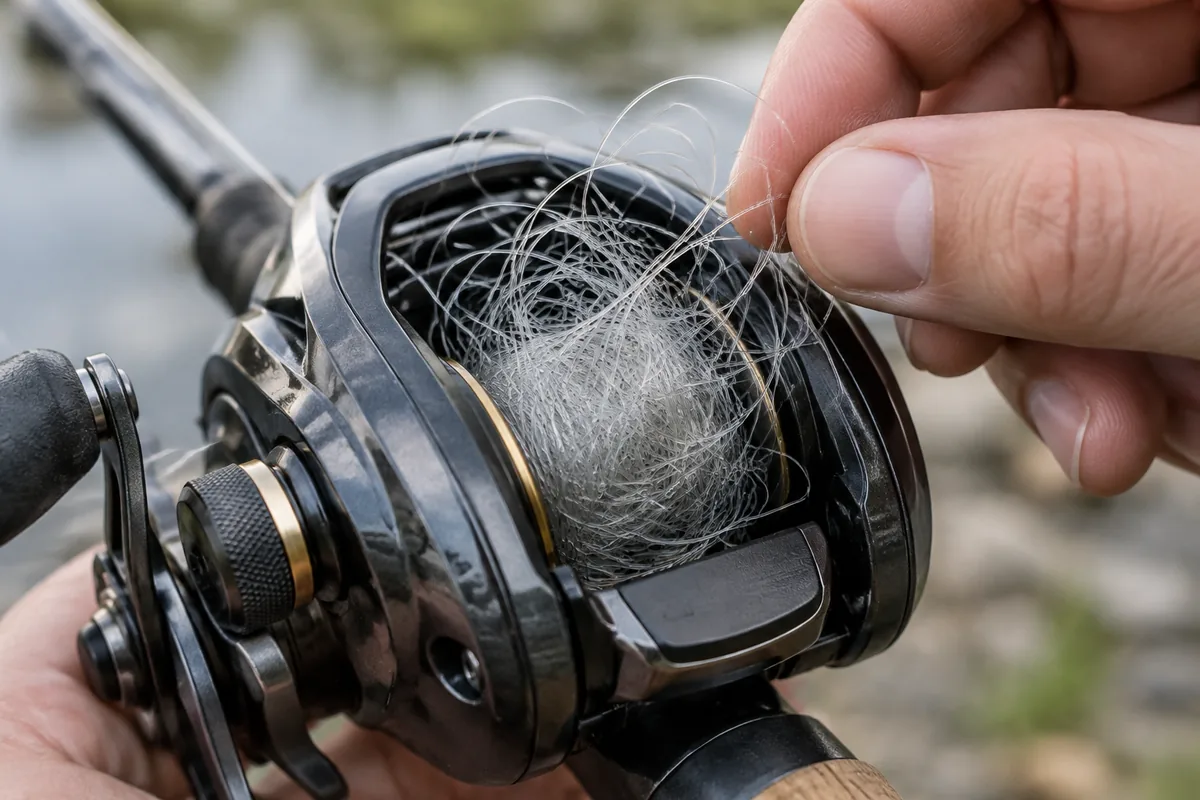
Quick answer: To clear a bird’s nest, thumb the spool and pull the line steadily to find the loop that is jammed, then pick it free with your fingers and reel down. For a bad tangle, press your thumb on the pile, turn the handle once to seat the loops, and pull the line out in one firm motion.
Key takeaways
- Start by pulling the line steadily to find the jammed loop.
- The thumb press trick seats the loops so they pull free.
- Know when to cut and re spool instead of fighting a bad tangle.
- Prevention beats cure, so set the reel to avoid backlash.

Every baitcaster angler gets a bird’s nest sooner or later. That tangled pile of line looks hopeless, but most clear in seconds once you know the trick. Panic and yank, and you make it worse. Stay calm and use the right method, and you are casting again fast. This guide shows you two proven ways.
You learn the simple pick method, the thumb press trick for bad tangles, and when to cut your losses. It pairs with backlash prevention so you spend less time picking line.
The Simple Pick Method
For a light backlash, this usually works. Hold the spool with your thumb, then pull the line steadily above the tangle. As you pull, watch the pile. The line will tighten and reveal the loop that is jammed. Use your fingers to pick that loop free, then pull again. Repeat until the line comes loose, and reel down the slack.
Go slow and steady. Yanking hard tightens the tangle. Gentle, patient pulling finds and frees the jam without making a bigger mess.
The Thumb Press Trick
For a bad tangle, this trick often clears it in one move. Press your thumb firmly down on the pile of loose line on the spool. Then turn the handle once, which seats the loops under your thumb. Now pull the line straight out with steady pressure. The seated loops usually pull free together, clearing the nest fast.
It sounds odd, but pressing and turning locks the loose loops so they release as one when you pull. It saves many minutes of picking on a rough backlash.
When to Cut and Re Spool
Some tangles are not worth the time. If a nest is deeply buried and both methods fail after a few minutes, cut the line above the tangle, remove the mess, and re spool that section. Losing a few yards of line beats losing your fishing time. Keep spare line handy for exactly this reason.
Preventing the Next One
The best fix is not needing one. Set your spool tension so a lure falls slowly and stops on landing, keep the brakes high while learning, and feather the spool with your thumb on every cast. Do these and bird’s nests become rare. When one does happen, the methods above clear it fast.
Frequently asked questions
How do you get a backlash out fast?
Pull the line steadily above the tangle to find the jammed loop, pick it free, and repeat. For a bad nest, press your thumb on the pile, turn the handle once to seat the loops, then pull the line straight out.
What is the thumb press trick?
You press your thumb firmly on the pile of loose line, turn the handle once to seat the loops under your thumb, then pull the line straight out. The seated loops usually release together, clearing a bad backlash fast.
When should you just cut the line?
When a nest is deeply buried and both clearing methods fail after a few minutes. Cut above the tangle, remove the mess, and re spool that section. Saving your fishing time is worth a few lost yards of line.
How do you stop bird’s nests?
Set the spool tension so a lure falls slowly, keep the brakes high while learning, and feather the spool with your thumb on every cast. Proper setup and thumb control prevent most backlash before it starts.