Best Line for a Baitcaster: Braid vs Fluoro vs Mono
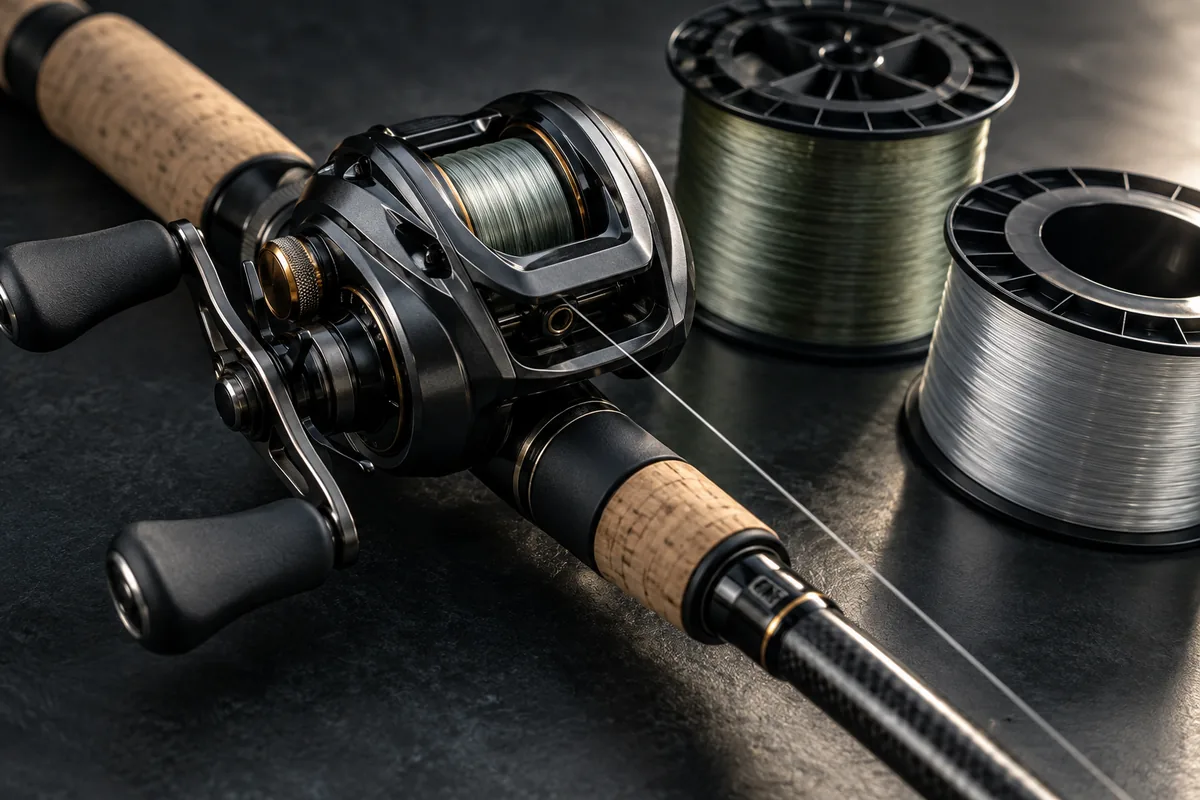
This guide covers the line for a baitcaster with hands on, tested picks.
Quick answer: Braid casts far and has no stretch, fluorocarbon is nearly invisible and sinks, and monofilament floats and forgives. Most baitcaster anglers spool braid for cover and topwater, fluorocarbon for jigs and clear water, and mono for cranks and topwater. Match the line to the lure and the cover.
Key takeaways
- Braid: strong, thin, no stretch, floats. Best for cover and braid to leader rigs.
- Fluorocarbon: low visibility, sinks, sensitive. Best for jigs and clear water.
- Monofilament: floats, stretches, forgives. Best for cranks and topwater.
- Match the line to the lure and the cover, not to a single rule.

The line you spool changes how every lure fishes. The wrong line kills a topwater bait or hides a jig bite. The right line makes a lure come alive. Baitcasters also handle heavier line than spinning reels, which opens up choices. This guide sorts out which line to use and when.
You learn what each of the three lines does, how they compare, and a simple way to choose by lure and cover. The explanation leans on how the lines behave in the water and on line maker data.
How the Three Lines Differ
Braid is many fibers woven together. It is very strong for its thin diameter, has almost no stretch, and floats. That thin, strong, no stretch nature makes it cast far and set hooks hard, and it cuts through grass. Its downside is high visibility, so anglers often add a leader in clear water.
Fluorocarbon is a single strand that is nearly invisible underwater and sinks. It transmits feel well and resists abrasion. That makes it ideal for jigs, worms, and clear water, where stealth and sensitivity matter. It has less stretch than mono but more than braid.
Monofilament is a single strand that floats and stretches. The stretch forgives mistakes and cushions treble hooks, and the float keeps topwater baits riding right. It is also the cheapest line. Its downside is more stretch, which reduces feel and hookset power at distance.
Which Line for Which Lure
| Line | Stretch | Visibility | Floats or sinks | Best use |
|---|---|---|---|---|
| Braid | None | High | Floats | Grass, frogs, braid to leader |
| Fluorocarbon | Low | Very low | Sinks | Jigs, worms, cranks, clear water |
| Monofilament | High | Medium | Floats | Topwater, squarebills, beginners |
A simple system covers most fishing. Spool braid for heavy cover, frogs, and punching, where you need to cut grass and set hard. Spool fluorocarbon for jigs, worms, and clear water, where feel and stealth matter. Spool mono for topwater and crankbaits, where float and stretch help. Many anglers run braid as a main line with a fluorocarbon leader to blend the strengths of both.
The Braid to Leader Setup
One popular option blends two lines. You spool braid for its casting distance and strength, then tie on a fluorocarbon leader for its low visibility and abrasion resistance. This gives you the best of both, and baitcasters handle the heavier braid with ease. Use a strong knot to join them, and keep the leader a few feet long.
How to Choose Yours
Match the line to the lure and cover, not to a single rule. If you throw one type of lure most, spool the line that suits it. If you switch often, braid to a fluorocarbon leader covers a lot of ground. For a first baitcaster, monofilament is forgiving and cheap while you learn, then move to braid and fluorocarbon as your skills grow.
Frequently asked questions
What line should I put on a baitcaster?
Match it to your fishing. Braid for heavy cover and frogs, fluorocarbon for jigs and clear water, and monofilament for topwater and crankbaits. Many anglers spool braid with a fluorocarbon leader to blend distance, strength, and stealth.
Braid or fluoro for bass?
Both, depending on the lure. Use braid in heavy grass and for frogs, where you need to cut cover and set hard. Use fluorocarbon for jigs, worms, and clear water, where feel and low visibility matter. A braid to fluoro leader combines them.
Does mono or braid float?
Both float. Monofilament floats and stretches, which suits topwater and crankbaits. Braid also floats and has no stretch, which suits frogs and heavy cover. Fluorocarbon is the one that sinks, which helps jigs and deep baits.
What pound line for a baitcaster?
It depends on the fish and cover. Use 8 to 12 pound for finesse and clear water, 12 to 17 pound for all around bass, 20 to 30 pound for heavy cover, and 40 to 65 pound braid for frogs and punching. Baitcasters handle heavier line than spinning reels.