Best Baitcaster Combo for Jigs: Feel Every Bite
This guide covers the baitcaster combo for jigs with hands on, tested picks.
Quick answer: Jig fishing wants a 7 foot to 7 foot 3 inch medium heavy fast action baitcaster with a 6.3:1 to 7.3:1 reel and 15 to 20 pound fluorocarbon. The sensitive fast tip telegraphs the subtle jig bite, and the strong backbone drives a stout hook through a bass jaw in cover.
Key takeaways
- Sensitivity is the whole game. A jig bite often feels like a tick or extra weight.
- A fast tip on a medium heavy rod reads the bite and sets a hard hook.
- Fluorocarbon sinks and transmits bottom feel better than mono.
- Match the rod to the jig type, from football to flipping to finesse.

A jig catches some of the biggest bass of the year, but only if you feel the bite. Jig strikes are subtle. A bass often inhales the jig and holds it, so all you feel is a tick, a tap, or the line moving. Miss that signal and the fish spits the jig. Feel is everything.
This guide points you to the combo that turns those faint signals into hooksets. You learn how a jig bite feels, the specs that read it, and picks for each jig style. The advice reflects how anglers fish football jigs on rock, flipping jigs in cover, and finesse jigs on pressured water.
How a Jig Bite Actually Feels
Jig bites come in a few forms, and none of them slam. You might feel a sharp tick as the jig falls. You might feel the line get heavy, as if you snagged a leaf. Or you might see the line jump or swim to the side. A bass often eats the jig on the fall, when you are not expecting it.
The lesson is to stay in contact and set on anything different. A sensitive combo lets you feel these faint signals through the rod, so you react before the bass drops the jig. Dull gear hides the bite and costs you fish.
What Matters in a Jig Combo
Rod power and action
Choose medium heavy power with a fast action in a 7 foot to 7 foot 3 inch rod. The fast tip transmits the bite and sets the hook crisply, while the medium heavy backbone drives a stout jig hook and pulls bass from cover. Match the exact rod to your jig, with a bit more power for flipping jigs and a lighter touch for finesse jigs.
Reel and gear ratio
A 6.3:1 to 7.3:1 reel works well. The faster end picks up slack for a quick hookset when a bass swims off with the jig. A medium ratio gives a bit more cranking power for pulling fish from cover. Either way, a jig reel needs a smooth, strong drag for the fight.
Line
Spool 15 to 20 pound fluorocarbon for most jig fishing. Fluorocarbon sinks and transmits bottom contact, so you feel the jig tick rocks and the bite when it comes. It also resists abrasion in cover. In heavy grass, switch to braid so you can pull fish from the mat.
The Best Jig Combos for 2026
Confirm price and specs before buying.
| Pick | Best for | Rod | Ratio | Line |
|---|---|---|---|---|
| Medium heavy jig combo | Best overall | 7’3″ med heavy, fast | 7.1:1 | 17 lb fluoro |
| Football jig combo | Best for rock | 7’3″ med heavy | 6.3:1 | 15 lb fluoro |
| Flipping jig combo | Best for cover | 7’6″ heavy | 7.3:1 | 50 lb braid |
| Value jig combo | Best budget | 7′ med heavy, fast | 7:1 | 15 lb fluoro |
Best overall: a medium heavy jig combo
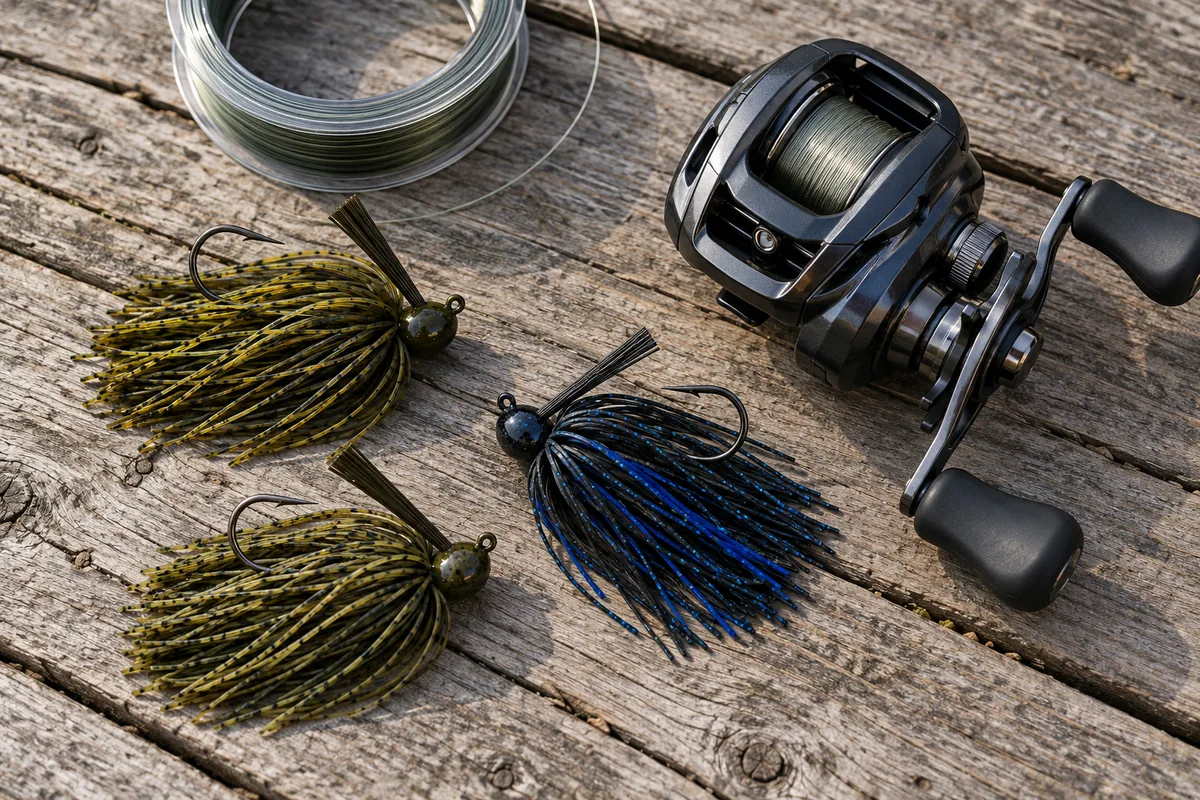
A 7 foot 3 inch medium heavy fast rod with a 7.1:1 reel and 17 pound fluorocarbon reads the bite and sets a hard hook. It handles football, swim, and casting jigs across most water. For one jig setup that does nearly everything, this is the pick.
Best for rock: a football jig combo
Football jigs shine on rock and hard bottom, dragging along to mimic a crawfish. A 7 foot 3 inch medium heavy rod with a slower 6.3:1 reel and 15 pound fluorocarbon keeps the jig crawling and telegraphs every tick of the bottom. The slower ratio helps you feel your way along structure.
Best budget: a value jig combo
Jig fishing does not require a pricey combo. A value 7 foot medium heavy fast setup with 15 pound fluorocarbon gives the sensitivity and backbone the technique needs. The finish is basic, but the feel is there. A strong first jig combo that catches big bass.
How to Choose and Fish Yours
Match the rod to your main jig. Football jigs on rock suit a slightly slower reel for feel, while flipping jigs in cover want heavy power and braid. For all around jig fishing, the medium heavy overall pick covers you. Then spool fluorocarbon for feel, or braid in grass.
Stay in contact with the jig at all times. Keep a slight tension on the line as the jig falls and crawls, so a faint bite reaches your hand. Set on anything unusual, since a jig bite rarely announces itself. A trailer that matches the water adds action and draws more bites.
Frequently asked questions
What rod for jig fishing?
A medium heavy, fast action rod from 7 feet to 7 foot 3 inches. The fast tip reads the subtle bite, and the medium heavy backbone drives a stout hook and pulls bass from cover. Step to heavy power for flipping jigs in thick cover.
What line for a bass jig?
Use 15 to 20 pound fluorocarbon for most jig fishing. It sinks, transmits bottom feel, and resists abrasion in cover. Switch to 50 pound braid when flipping jigs into thick grass, where you need to cut vegetation and pull fish out.
What gear ratio for jigs?
A 6.3:1 to 7.3:1 reel. The faster end picks up slack for a quick hookset. A slower ratio suits dragging football jigs on rock, where feel matters more than speed. Either way, choose a reel with a smooth, strong drag.
How do you feel a jig bite?
Stay in contact with the jig and watch for a tick, a sudden heaviness, or the line jumping or swimming to the side. Bass often eat a jig on the fall. A sensitive fluorocarbon and fast rod setup lets you feel these faint signals.