Best Baitcaster Combo for Crankbaits: Keep the Trebles Pinned
This guide covers the baitcaster combo for crankbaits with hands on, tested picks.
Quick answer: Crankbaits fish best on a 7 foot to 7 foot 6 inch medium or medium heavy moderate action rod with a slower 5.4:1 to 6.3:1 reel and 10 to 15 pound fluorocarbon. The soft moderate tip lets treble hooked fish load up without pulling free, and the slower reel keeps the bait in the strike zone.
Key takeaways
- A moderate action rod keeps treble hooks pinned. A fast rod pulls them out.
- A slower reel keeps the crankbait in the zone and stops you ripping it away.
- Fluorocarbon sinks, so it helps crankbaits reach and hold depth.
- Match rod length to how deep you want the bait to dive.

Crankbaits fool bass that ignore everything else, but they also lose fish that other lures would land. The reason is the treble hooks. A bass hooked on small trebles pulls free if your rod is too stiff or your reel too fast. The gear that shines everywhere else fails here.
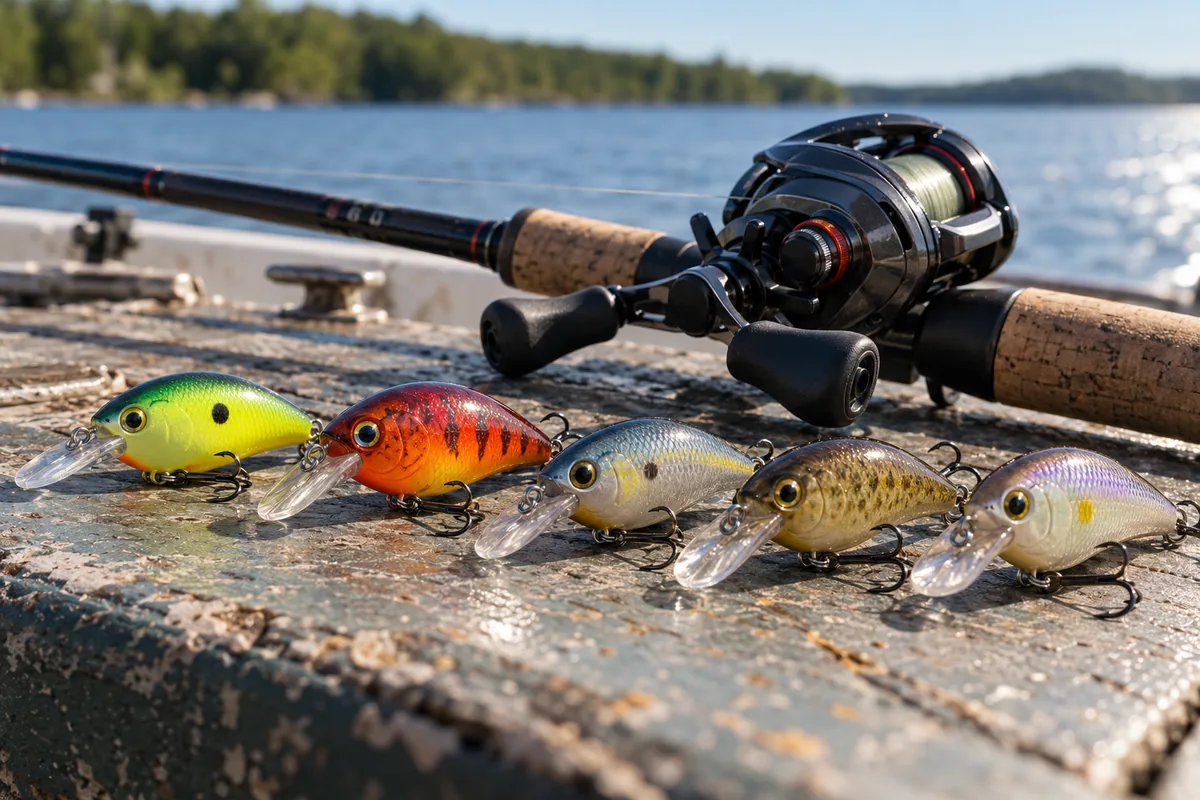
This guide explains why, and it points you to the setup that keeps cranked fish buttoned. You learn the action that matters, the reel speed that helps, and picks for shallow to deep cranking. The advice reflects how anglers fish squarebills, mid divers, and deep crankbaits for bass.
Why Fast Rods Lose Crankbait Fish
Here is the physics. A crankbait has treble hooks with small, exposed points. A bass often swipes at the bait and gets hooked on just one or two points. A stiff, fast rod has little give, so when the fish surges, the hard rod tears those small hooks free. You feel a fish, then nothing.
A moderate action rod bends deep and slow. When a fish pulls, the whole rod loads and cushions the surge, keeping the hooks pinned. That give is why crankbait anglers choose moderate over fast, the opposite of a jig or flipping rod.
What Matters in a Crankbait Combo
Rod action and power
Choose a moderate or moderate fast action in medium or medium heavy power, in a 7 foot to 7 foot 6 inch rod. The moderate tip cushions treble hooks. Medium power suits smaller cranks, and medium heavy handles bigger deep divers. Fiberglass and composite blanks add even more give, which is why some cranking rods use them.
Reel and gear ratio
Run a slower 5.4:1 to 6.3:1 reel. A slow reel keeps the crankbait moving at a steady, natural pace and stops you from ripping it out of the zone. The slower ratio also adds cranking power for pulling a deep diver against its resistance. Fast reels tempt you to burn the bait too quickly.
Line
Spool 10 to 15 pound fluorocarbon. It sinks, which helps a crankbait reach and hold its depth. It also resists abrasion when you bump the bait into rocks and wood, which is how crankbaits draw strikes. For shallow squarebills, lighter mono can work, but fluorocarbon is the standard.
The Best Crankbait Combos for 2026
Confirm price and specs before buying.
| Pick | Best for | Rod | Ratio | Line |
|---|---|---|---|---|
| Moderate action combo | Best overall | 7′ med, moderate | 6.3:1 | 12 lb fluoro |
| Deep crank combo | Best for deep divers | 7’6″ med heavy | 5.4:1 | 12 to 15 lb fluoro |
| Squarebill combo | Best for shallow | 7′ medium | 6.3:1 | 12 lb fluoro |
| Value crank combo | Best budget | 7′ med, moderate | 6.2:1 | 12 lb fluoro |
Best overall: a moderate action combo
A 7 foot medium moderate action rod with a 6.3:1 reel and 12 pound fluorocarbon covers most cranking. The soft tip keeps trebles pinned, and the ratio moves the bait at a natural pace. It handles squarebills and mid divers with ease. Start here for all around crankbait fishing.
Best for deep divers: a deep crank combo
Deep crankbaits fight the water and pull hard, so a longer 7 foot 6 inch medium heavy rod with a slow 5.4:1 reel does the work. The length makes long casts that let the bait reach depth, and the slow reel cranks the bait down without wearing you out. This is a specialized deep tool.
Best for shallow: a squarebill combo
Squarebills deflect off cover to trigger strikes, and a 7 foot medium rod with a moderate tip lets you fish them fast while still holding hooked fish. The 6.3:1 reel keeps the bait bumping cover at the right pace. A fun, reactive setup for shallow water.
How to Choose and Fish Yours
Match the combo to your crank depth. Shallow squarebills suit a medium moderate rod, while deep divers need a longer medium heavy rod and a slow reel. Then spool fluorocarbon and fish the bait into cover, letting it bump rocks and wood, since deflections trigger strikes.
Do not set the hook hard on a crankbait. When you feel weight, just keep reeling and let the rod load. A hard hookset with a moderate rod often pulls the small trebles free. Let the bend of the rod and steady pressure do the work.
Frequently asked questions
What action rod for crankbaits?
A moderate or moderate fast action. The slow, deep bend cushions treble hooks so a surging bass cannot tear them free. A fast action rod is too stiff for crankbaits and loses fish, which is the opposite of what jigs and worms need.
What gear ratio for crankbaits?
A slower 5.4:1 to 6.3:1 reel. It keeps the bait moving at a steady pace and stops you from ripping it out of the zone. The slower ratio also adds power for cranking deep divers against their resistance.
Why do I lose fish on crankbaits?
Usually because your rod is too stiff or you set the hook too hard. Small treble hooks pull free from a fast rod when a fish surges. Use a moderate action rod, and instead of a hard set, keep reeling and let the rod load.
Fluoro or mono for crankbaits?
Fluorocarbon is the standard. It sinks, which helps the bait reach and hold depth, and it resists abrasion on cover. Lighter mono can work for shallow squarebills, since it floats and keeps them running high, but fluorocarbon suits most cranking.