Best Baitcaster Combo for Walleye: Feel the Bite, Set the Hook
This guide covers the baitcaster combo for walleye with hands on, tested picks.
Quick answer: The best walleye setup pairs a 6 foot 6 inch to 7 foot medium light or medium rod with a 6.3:1 reel and 10 to 15 pound line. That mix casts light jigs and crankbaits, telegraphs the soft walleye bite, and still has the backbone to drive a hook in current or wood. Sensitivity matters more than raw power here.
Key takeaways
- Pick sensitivity over power. Walleye bite softly, and a stiff rod hides the take.
- A 6.3:1 reel is the sweet spot. It works for jigs, cranks, and rigs alike.
- Braid to a fluorocarbon leader gives you feel plus a low visibility connection.
- Match the rod to your main method. Jiggers want a fast tip. Crankers want a slower one.
- A spinning combo still wins for the lightest jigs. Read the honest section below before you buy.

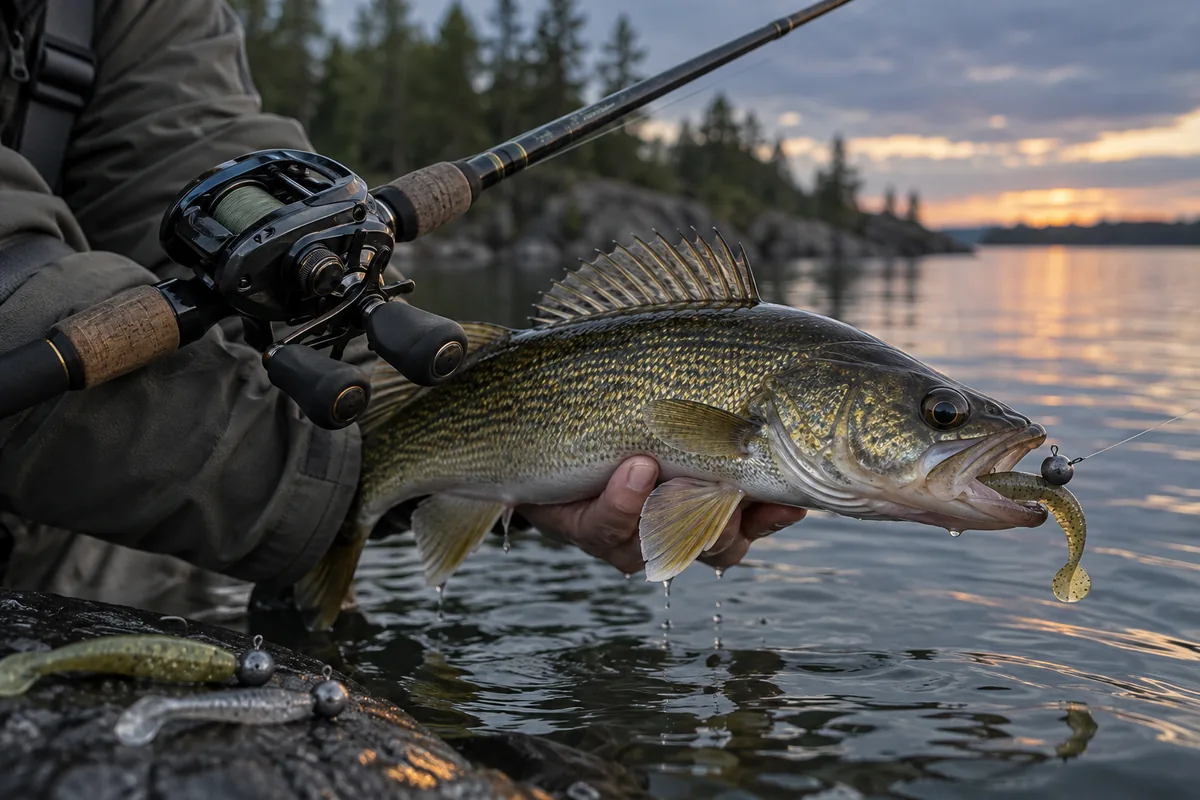
Walleye humble more anglers than they should. The fish does not slam a bait. It lifts the jig, swims toward you, or simply holds it. If your rod is too stiff or your line has too much stretch, you never feel it. You reel up and the jig is clean. That miss is a gear problem, not a skill problem.
This guide fixes that. Below you get the specs that reveal the bite, five combos matched to how you actually fish, and a clear method to choose. Every pick leans on verified reel specs and reports from owners who chase walleye on waters like Lake Erie, Bay of Green Bay, and the big rivers.
Why a Baitcaster, and When Not to Use One
A baitcaster gives you thumb control over the cast and a direct connection to the lure. You place a jig next to a rock, feel it tick bottom, and react the instant a fish loads up. For jigs over a quarter ounce, crankbaits, blade baits, and heavier rigs, that control pays off all day.
Here is the honest part. For jigs under an eighth of an ounce, a spinning combo casts better and backlashes never happen. Many walleye pros keep a spinning rod rigged for light jigs and a casting rod for everything heavier. If most of your fishing is finesse jigging in clear water, start with spinning. If you throw cranks, heavier jigs, and rigs, a casting setup earns its place fast.
What Actually Matters in a Walleye Combo
Four things decide whether a combo works for this fish. Get these right and the brand name matters less.
Rod power and action
Aim for medium light or medium power with a fast action. Medium light loads with light jigs and shows the bite in the tip. A fast action tip stays sensitive while the lower rod keeps enough backbone for the hookset. Skip heavy rods. They belong to bass in cover, not walleye on a soft bite.
Length
A 6 foot 6 inch rod gives accuracy for pitching jigs to structure. A 7 foot rod adds casting distance for cranks and covers more water. If you fish from a boat and cast a lot, 7 foot is the versatile default. In a kayak or tight quarters, drop to 6 foot 6 inch.
Gear ratio
A 6.3:1 reel is the one ratio that does it all here. It moves a crankbait at a natural speed, picks up slack fast on a jig, and still has torque for a rig. If you crank a lot in deep water, a slower 5.4:1 keeps the bait down longer. If you snap jig, a faster 7.1:1 recovers line quickly. When in doubt, 6.3:1.
Line and connection
Spool 10 to 15 pound braid and tie on a fluorocarbon leader. Braid has almost no stretch, so a soft take travels straight to your hand. Fluorocarbon sinks and nearly disappears in clear water, which matters for a fish with sharp eyes. In stained water or heavy current, straight fluorocarbon in 10 to 12 pound also works.
The Best Walleye Baitcaster Combos for 2026
These picks span budgets and methods. Confirm the current price and exact model before you order, since makers update specs each season.
| Pick | Best for | Rod | Ratio | Line rating |
|---|---|---|---|---|
| Lew’s Mach 2 | Best overall | 7′ medium | 6.3:1 | 10 to 15 lb |
| Abu Garcia Max SX | Best for jigging feel | 7′ medium, fast | 6.8:1 | 10 to 14 lb |
| KastKing Centron Lite | Best budget | 6’6″ medium | 7.1:1 | 8 to 12 lb |
| Lew’s Mach Smash | Best for cranking | 7′ medium | 6.3:1 | 12 to 15 lb |
| Daiwa Tatula (build) | Best premium | 7′ medium, fast | 6.3:1 | 10 to 15 lb |
Best overall: Lew’s Mach 2
The Mach 2 hits the walleye sweet spot. The 6.3:1 reel handles jigs, cranks, and rigs without a swap, and the rod carries enough tip feel to read a light lift. It casts smoothly out of the box, which keeps beginners out of trouble. For one combo that covers most walleye water, start here.
Trade off. It is a mid range price, not the cheapest option. If your budget is tight, the Centron Lite below covers the basics.
Best for jigging feel: Abu Garcia Max SX
Jig anglers live and die by sensitivity, and the Max SX delivers a crisp, fast tip with a smooth seven bearing reel. The slightly faster 6.8:1 ratio picks up slack the moment a walleye swims up with the jig. Pair it with 10 pound braid and a fluorocarbon leader for the clearest signal to your hand.
Trade off. The fast tip is less forgiving on treble hooked cranks. If you crank more than you jig, pick the Mach Smash.
Best budget: KastKing Centron Lite
The Centron Lite proves a walleye combo does not need to cost a lot. The IM6 graphite rod is light and sensitive for the price, and the reel casts light jigs better than its cost suggests. The 7.1:1 ratio runs a touch fast for deep cranks, so lean this one toward jigs and shallow presentations.
Trade off. The drag and finish trail pricier reels. It is a strong first combo, not a lifetime one.
Best for cranking: Lew’s Mach Smash
Crankbaits need a rod that gives when a treble hooked fish surges. The Mach Smash pairs a slightly softer tip with the do everything 6.3:1 reel, so hooks stay pinned on the run. Spool 12 to 15 pound line and pull shallow to mid depth cranks with confidence.
Trade off. That softer tip costs a little jigging sensitivity. It is a cranker first.
Best premium: a Daiwa Tatula build
If you fish often and want a reel that lasts years, build a combo around a Daiwa Tatula. The Magforce braking makes casting light jigs easy, and the light body cuts fatigue over a long troll and cast day. Match it to a 7 foot medium fast walleye rod for a setup that feels every tick.
Trade off. Price. You pay for materials and casting ease. For a few trips a year, the picks above give most of the performance.
How to Choose Yours in Two Minutes
Start with your main method. If you jig most of the time, buy the most sensitive rod you can afford and lean toward a fast tip. If you crank, pick a slightly softer tip so trebles stay hooked. If you split your time, the 6.3:1 overall picks cover both.
Next, set your budget honestly. A sub 100 combo like the Centron Lite catches every walleye a 300 combo does. The extra money buys lighter weight, a smoother drag, and years of durability, not more fish on a given day.
Last, match your water. Clear lakes reward the fluorocarbon leader and lighter line. Stained rivers let you fish a touch heavier. Set the reel drag to about a third of your line strength so a hot fish near the boat cannot snap off.
Setup Tips That Put More Walleye in the Net
Fish the low light. Walleye feed hardest at dawn, dusk, and after dark, and in stained or windy water during the day. State fishery agencies note their eyes are built for low light, which is why the bite turns on when the sun drops.
Match jig weight to depth. A rough rule is an eighth ounce per ten feet of water in light current, then adjust up in wind or flow. You want the lightest jig that still holds bottom, because a slower fall draws more bites.
Watch your line, not just your rod. Many walleye bites show as the line jumping or going slack, not as a thump. Keep a slight bow in the line on the fall and set the hook on anything that looks off.
Frequently asked questions
What gear ratio is best for walleye?
A 6.3:1 reel is the best all around choice. It runs crankbaits at a natural speed, picks up slack on a jig, and has torque for rigs. Choose 5.4:1 if you crank deep water often, or 7.1:1 if you snap jig and need fast line pickup.
Is a baitcaster or spinning reel better for walleye?
Use a baitcaster for jigs over a quarter ounce, crankbaits, and rigs, where thumb control and a direct feel help. Use spinning for the lightest jigs in clear water. Many walleye anglers carry both and match the reel to the lure weight.
What pound line should I use for walleye?
Spool 10 to 15 pound braid and tie on an 8 to 12 pound fluorocarbon leader. Braid gives you feel, and the leader stays low in visibility for a sharp eyed fish. In stained water or current, straight 10 to 12 pound fluorocarbon also works.
Can you jig for walleye with a baitcaster?
Yes, as long as the jig is heavy enough to cast, usually an eighth ounce or more. Use a medium light rod with a fast tip and braid to a fluorocarbon leader so you feel the soft lift bite. For jigs lighter than an eighth ounce, spinning casts better.